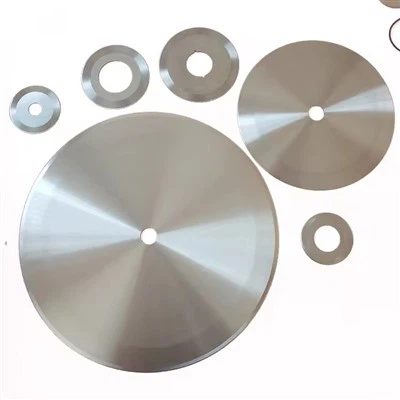
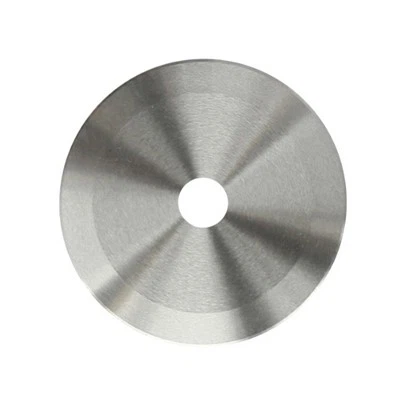
Hey folks, if you’ve ever worked with both rubber materials and compound miter saws, you’ve probably stared at a pile of rubber cutting saw blades and a miter saw sitting in your workshop or shop, wondering: wait, can I just slap that rubber blade on here instead of hunting for a dedicated one? As someone who’s been in the rubber cutting saw blade game for years, I get that urge—no one wants to waste time or money on extra tools when you’ve got a perfectly good saw sitting around. Today, let’s break this down straight, no confusing jargon, and get to the bottom of this question once and for all.
First, let’s make sure we’re on the same page about what each of these things actually is, because mixing up terms is half the battle. A compound miter saw—you know the one—does those angled cuts perfect for trim, molding, or even thin wood; it tilts left and right, pivots the blade, all that jazz. A rubber cutting saw blade, well, that’s made specifically for slicing through all kinds of rubber: foam rubber, solid rubber, even tire rubber. If you’re not familiar with our line, check out our Rubber Cutting Saw Blade page to see exactly what we’re talking about—these aren’t your average metal-cutting blades.
Now, let’s start with the short answer before we dive into the details: yeah, technically you can use a rubber cutting saw blade on a compound miter saw… but it’s not always a great idea, and there’s a whole bunch of stuff you need to watch out for to make it work without ruining your saw, your blade, or worse, injuring yourself. Let’s unpack why that is.
First, let’s talk about blade specifications, because that’s where most people go wrong when swapping blades between saws. Compound miter saws are built to work with blades that have a specific arbor size (the hole in the center that fits onto the saw’s spindle), a specific diameter, and a certain tooth count and tooth design. Our rubber cutting blades, for example, have a very different tooth setup than a standard miter saw blade. A lot of rubber blades—especially the ones we make—are actually toothed blades, but not the sharp, pointy teeth you’d see on a wood blade. They’re usually designed with wider, more spaced-out teeth, or even carbide-tipped teeth that are shaped to grab rubber without tearing it. Wait, if you want to see the difference between a standard toothed blade and a specialized one like ours, you can check out these Toothed Blade resources to get a better look at tooth geometry.
Here’s the big catch when it comes to mounting: arbor size. A lot of compound miter saws use a 5/8-inch arbor, but some smaller or older models use 10mm or 1/2-inch. Our rubber cutting blades are almost always made with the same arbor size to fit standard miter saws, but you have to double-check. If the arbor hole is too big, you can use a reducer bushing, but if it’s too small? Forget it—you can’t force it, that’s a safety hazard. Also, blade diameter: compound miter saws are rated for a maximum blade size (usually 10-inch or 12-inch for most home and shop models). Our rubber blades come in those sizes too, but if you try to put an 8-inch blade on a saw built for 12-inch, it won’t seat right, and you’ll get terrible cuts.
Next up: the speed of the miter saw. This is probably the most important factor, and the one that most DIYers or even small shop owners overlook. Compound miter saws spin their blades at super high speeds—usually between 3,000 and 5,000 RPM (rotations per minute). Now, rubber is a flexible, heat-sensitive material. If you spin a rubber blade at that kind of speed, two bad things happen fast: first, the rubber starts to heat up from friction, and it will literally melt, gum up the blade teeth, and make a huge mess of your cut. Second, the high speed can cause the rubber blade to flex or even vibrate so much that it’s unstable, leading to wobbly cuts or even the blade coming loose.
Wait a second—our rubber cutting blades are designed for lower RPM saws, right? Because when you’re cutting rubber, you want slower, smoother cuts, not fast, harsh ones. If you put our blade (or any rubber blade) on a high-RPM miter saw, you’re working against the blade’s design. That said, there is a fix here: if your miter saw has a speed adjustment setting (some newer models do), you can crank the speed way down to under 2,000 RPM. That’s the sweet spot for rubber cutting—slower speed means less heat, less gum-up, and cleaner cuts. If your miter saw doesn’t have adjustable speed, using a rubber blade might still work for very thin, soft rubber, but it’s not ideal for thick, dense rubber.
Now, let’s talk about safety, because this can’t be emphasized enough. Compound miter saws have guards that are built for standard blades—hard, rigid blades that don’t flex. Rubber blades, on the other hand, are much more flexible. When you’re making an angled cut on a miter saw, the blade moves around, and a flexible rubber blade can get caught in the guard or the saw’s mechanism, leading to kickback. Kickback is when the workpiece gets thrown back at you, and it’s no joke. Also, rubber blades don’t have the same rigidity as steel or carbide blades, so if you’re applying too much pressure when cutting (a common habit when using wood blades), you can bend or break the rubber blade, sending pieces flying.


But wait, it’s not all bad. There are definitely cases where using a rubber cutting saw blade on a compound miter saw works well, as long as you follow the rules. Let’s say you’re a small hobbyist who only has a compound miter saw, not a dedicated rubber cutting saw, and you need to cut a few pieces of foam rubber for a project. If you get the right size blade, slow the saw’s RPM down as much as possible, and go super easy on the feed rate, you can get by. For small, low-volume jobs, this is a totally viable option—no need to buy a whole new saw for a one-off project.
But what if you’re doing more than just a few cuts? If you’re running a shop, doing regular rubber work, or making precise cuts (like angled trim for rubber seals, for example), this setup is not going to cut it (pun intended). The high speed will wear out your rubber blade way faster, you’ll end up with jagged, uneven cuts, and you risk damaging your miter saw’s motor from the extra strain. That’s why most people who do consistent rubber work have a dedicated saw, or at least a different blade designed for slower speeds.
Let’s talk about our specific products, since that’s what we know best. Our Rubber Cutting Saw Blade line is engineered for saws with lower RPM ranges, usually between 1,000 and 2,000 RPM, with optimized tooth spacing to clear rubber debris without gumming. We also make other blades that might work with miter saws in a pinch—like our Toothed Blade options, if you need a blade with a bit more rigidity for slightly thicker rubber. Wait, if you’re looking for a toothed blade that’s compatible with miter saws, check out this Toothed Blade page for a look at our specs and sizes. We even make specialty blades, like our Tire Trimming Blade, which works great for cleaning up excess rubber on cut tire pieces—just make sure to match the size to your miter saw’s blade capacity.
Another thing to consider: blade life. A standard carbide miter saw blade costs around $20-$50, and lasts for years if you use it on wood. Our rubber blades are a bit more specialized, usually around $30-$60, but they won’t last nearly as long on a high-RPM miter saw. The heat and flex from high speeds will make the rubber wear out much faster—you might get 50-100 cuts instead of 500, which ends up being more expensive in the long run.
Wait, let’s test this with a real example. A customer of mine last year had a 10-inch compound miter saw with adjustable speed, and he wanted to cut rubber trim for a custom van conversion. He tried using his old wood blade, but it was tearing the rubber, so he grabbed a cheap rubber blade he had lying around. He set the speed to 1,800 RPM, used our Rubber Cutting Saw Blade, and went slow with the feed. He ended up with perfect angled cuts, no gum-up, and the blade lasted through all his trim pieces (around 200 feet of rubber) before it needed to be replaced. That’s a win! But another customer, who had a fixed-speed miter saw at 4,500 RPM, tried the same thing. The blade melted after 10 cuts, gummed up the saw’s spindle, and he had to clean the whole saw and replace the blade twice as fast as he thought. So it really depends on your saw.
Now, let’s lay out the do’s and don’ts if you’re going to try this:
DO:
- Check your miter saw’s blade specs: confirm the arbor size and maximum blade diameter, and pick a rubber cutting blade that matches.
- Adjust the speed: if your miter saw has variable speed, drop it to under 2,000 RPM—this is non-negotiable.
- Go slow on feed rate: push the workpiece into the blade gently, no hard pressure. Let the blade do the work.
- Wear proper PPE: safety glasses, gloves, maybe a dust mask—rubber dust can be irritating, and there’s always a risk of flying debris.
- Keep the blade clean: if it starts to gum up with rubber, stop and wipe it off with a little rubbing alcohol between cuts.
DON’T:
- Use a fixed-speed miter saw at its highest setting: this will overheat and destroy your blade, and is a safety hazard.
- Force the blade to fit: if the arbor size is wrong, don’t use a bushing that makes the blade wobble—this is a kickback risk.
- Use a rubber blade for high-volume, heavy-duty work: you’ll waste money on frequent blade replacements.
- Skip the safety guard: even though the rubber blade is flexible, don’t disable the guard— it’s there for a reason.
Wait, another point: compound miter saws are designed for crosscuts, right? Most of the time, when you use one, you’re cutting across the grain of wood. Rubber, especially solid rubber, is a different material—cutting it with a miter saw means you’re making crosscuts, but the blade’s engagement is different. Our rubber cutting blades have a different hook angle than wood blades, which helps with that crosscut on flexible materials, but that’s another reason why matching the blade to the material is important.
If you’re still on the fence about whether this works for your setup, here’s what I tell people: if you have a small project, a variable-speed miter saw, and a matching rubber blade from a reputable supplier (check out our Rubber Cutting Saw Blade page for sizes that fit most miter saws), go for it. It’s a quick fix that works. But if you’re doing regular rubber cutting, or your saw is fixed-speed, invest in a dedicated rubber saw. It will save you time, money, and headaches in the long run.
Now, I know a lot of folks might be thinking, “Why not just get a universal blade?” But trust me, there’s no such thing as a one-size-fits-all blade for rubber and miter saws. Our line of specialized blades—like our Toothed Blade range, or even our T Type Packaging Machine Blade for thinner rubber strips—are all designed for specific uses, and that’s what makes them work better than a random blade. If you try to use a wood-cutting toothed blade on rubber, you’ll get tears, jagged edges, and the blade will wear out fast, because those teeth are too sharp and not spaced enough to clear rubber debris.
Let’s wrap this up with a quick recap to make sure we didn’t miss anything. Can you use a rubber cutting saw blade on a compound miter saw? Yes, but only if you follow these key steps: match the blade size and arbor to your saw, lower the blade speed to under 2,000 RPM, go easy on the feed, and use proper safety gear. Skip this, and you’re looking at ruined cuts, worn-out blades, and potential safety issues.
If you’re in the market for a rubber cutting blade that’s made to work with compound miter saws, or you have questions about which blade fits your specific saw, don’t hesitate to reach out. We’ve been supplying quality blades for years, and we’re happy to help you find the right one for your projects.
REFERENCES
- Industrial Saw Blade Safety Standards. OSHA. (n.d.)
- "Cutting Rubber: A Guide to Proper Blade Selection and Speed Adjustment." Woodworking and Metalworking Monthly. Vol. 42, No. 3, 2022, pp. 18-21.
- Compound Miter Saw Operation and Maintenance. Bosch Power Tools Technical Manual. 2021.
- Properties of Rubber Materials for Industrial Cutting Applications. Rubber Chemistry and Technology. Vol. 95, No. 2, 2022, pp. 345-362.