As a supplier of alloy cutting tools, I've often been asked whether these tools need special packaging for transportation. This is a crucial question that impacts not only the safety of the tools during transit but also the overall customer experience. In this blog, I'll delve into the reasons why special packaging is often necessary for alloy cutting tools and how it benefits both suppliers and customers.
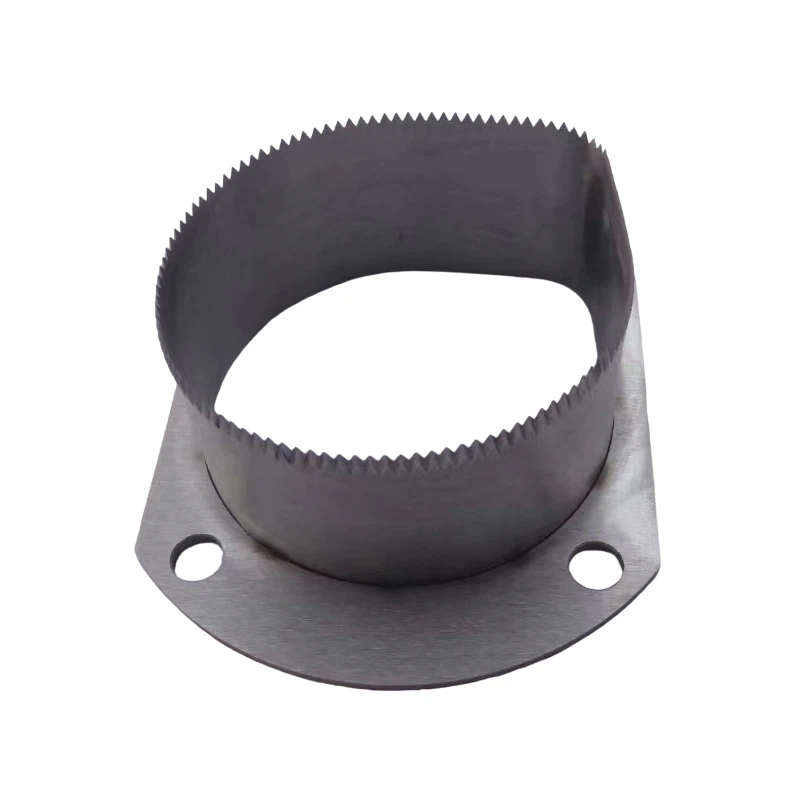
Alloy cutting tools, such as Laminating Machine Blade, Food Grinding And Cutting Blade, and Food Slicer Blade, are precision instruments. They are designed to cut through various materials with high efficiency and accuracy. However, their sharp edges and complex geometries make them vulnerable to damage during transportation.


One of the primary reasons for special packaging is to protect the cutting edges of the tools. Any damage to the cutting edge can significantly reduce the tool's performance and lifespan. For example, a small chip or nick on a Food Slicer Blade can cause uneven slicing, leading to customer dissatisfaction. Special packaging materials, such as foam inserts or custom - molded cases, can provide a cushioning effect, preventing the tools from coming into contact with hard surfaces or other objects that could cause damage.
In addition to protecting the cutting edges, special packaging also helps to prevent corrosion. Alloy cutting tools are often made from high - quality metals that can be prone to rust and corrosion when exposed to moisture or harsh environmental conditions. Packaging materials that are moisture - resistant, such as sealed plastic bags or containers with desiccants, can help to keep the tools dry and free from corrosion. This is especially important for long - distance transportation or when the tools are shipped to areas with high humidity.
Another aspect to consider is the safety of the people handling the tools during transportation. The sharp edges of alloy cutting tools pose a significant risk of injury. Special packaging can be designed to enclose the tools in a way that minimizes the risk of accidental cuts. For instance, blister packs or sheaths can be used to cover the cutting edges, making the tools safer to handle.
Moreover, proper packaging can enhance the brand image of the supplier. When customers receive their alloy cutting tools in well - designed, protective packaging, it gives them the impression that the supplier values quality and takes care of their products. This can lead to increased customer loyalty and positive word - of - mouth recommendations.
Now, let's talk about the different types of special packaging that can be used for alloy cutting tools.
Foam Inserts
Foam inserts are a popular choice for packaging alloy cutting tools. They can be custom - cut to fit the shape of the tools precisely. The soft and flexible nature of foam provides excellent cushioning, protecting the tools from shocks and vibrations during transportation. Foam inserts can also be used in combination with cardboard boxes or plastic cases to create a more robust packaging solution.
Custom - Molded Cases
Custom - molded cases are another option for high - end alloy cutting tools. These cases are designed to fit the tools perfectly, providing maximum protection. They are often made from durable materials such as plastic or fiberglass and can be equipped with locking mechanisms for added security. Custom - molded cases are ideal for tools that are expensive or require extra protection, such as Laminating Machine Blade.
Sealed Plastic Bags with Desiccants
For smaller alloy cutting tools, sealed plastic bags with desiccants are a cost - effective and practical packaging solution. The plastic bags prevent moisture from entering, while the desiccants absorb any remaining moisture inside the bag. This helps to keep the tools dry and corrosion - free.
Blister Packs
Blister packs are commonly used for packaging single - item alloy cutting tools. They consist of a clear plastic blister that encloses the tool and a backing card. Blister packs not only protect the tool but also allow customers to see the product clearly. They are also easy to handle and display.
However, it's important to note that special packaging does come with some challenges. The cost of packaging materials and the additional labor required for packaging can increase the overall cost of the product. Suppliers need to find a balance between providing adequate protection and keeping the costs reasonable.
In conclusion, alloy cutting tools do need special packaging for transportation. The benefits of special packaging, such as protecting the cutting edges, preventing corrosion, ensuring safety, and enhancing the brand image, far outweigh the associated costs. As a supplier, I'm committed to providing high - quality alloy cutting tools in the best possible packaging to ensure that our customers receive their products in perfect condition.
If you're in the market for alloy cutting tools, whether it's a Laminating Machine Blade, Food Grinding And Cutting Blade, or Food Slicer Blade, I encourage you to reach out to discuss your specific requirements. We can work together to find the right tools and packaging solutions for your needs. Let's start a conversation about your alloy cutting tool requirements and see how we can meet your expectations.
References
- "Packaging Design for Product Protection" by John A. Robertson
- "Corrosion Prevention in Metal Packaging" by Mary S. Johnson
- Industry reports on alloy cutting tool transportation and packaging