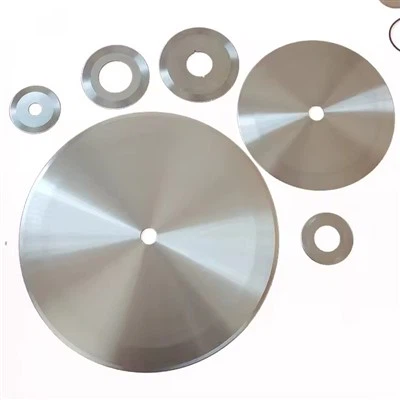
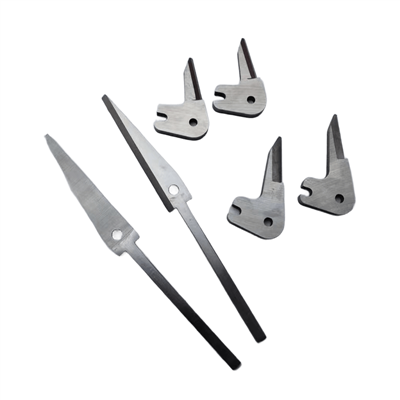
Hey there! I'm a supplier of non - standard blades, and I know how crucial it is to ensure the quality of these blades. In this blog, I'll share with you some effective ways to test the quality of non - standard blades.
1. Visual Inspection
First off, a simple visual check can tell you a lot. Take a close look at the blade's surface. It should be smooth, without any visible cracks, pits, or scratches. Any of these defects can weaken the blade and lead to premature failure. For example, a crack on the cutting edge can cause the blade to chip during use, which is a big no - no.
When you're dealing with Toothed Blade, pay special attention to the teeth. They should be evenly spaced and have a consistent shape. Uneven teeth can result in an uneven cut, which is not what you want, especially in precision applications.
2. Dimensional Accuracy
The dimensions of non - standard blades are super important. They need to meet the exact specifications required for the particular application. You can use measuring tools like calipers and micrometers to check the thickness, width, and length of the blade.
For instance, if you're using Non-standard Blades in a machine, even a small deviation in dimensions can cause the blade to fit poorly, leading to problems like vibration or inefficient cutting. Make sure the measurements are within the tolerance range specified by the design.
3. Hardness Testing
The hardness of a blade determines its ability to resist wear and deformation. There are several methods to test the hardness of a blade. One common way is the Rockwell hardness test. In this test, a small indenter is pressed into the surface of the blade with a specific load, and the depth of the indentation is measured.
A blade that is too soft will wear out quickly, while a blade that is too hard can be brittle and prone to cracking. You need to find the right balance. For different applications, the ideal hardness may vary. For example, Cake Cutting Machine Blades may require a different hardness compared to blades used in industrial cutting.
4. Cutting Performance Testing
The ultimate test of a blade's quality is how well it cuts. You can conduct cutting tests using materials similar to what the blade will be used on in real - world applications. For example, if the blade is designed for cutting wood, test it on a piece of wood.
During the cutting test, pay attention to the smoothness of the cut, the cutting force required, and the amount of material removed. A high - quality blade should make a clean, smooth cut with minimal effort. If you notice any rough edges, excessive chipping, or if the blade gets stuck during the cut, it may indicate a problem with the blade's quality.
5. Wear Resistance Testing
Wear resistance is another key factor in determining the quality of non - standard blades. You can simulate the wear process by conducting accelerated wear tests. One way to do this is to use a wear testing machine that rubs the blade against a abrasive material for a certain number of cycles.
After the test, measure the amount of material lost from the blade. A blade with good wear resistance will have minimal material loss. This is important because blades that wear out quickly will need to be replaced frequently, which can increase costs and downtime.
6. Corrosion Resistance Testing
If the blade will be used in an environment where it may be exposed to moisture or chemicals, corrosion resistance is crucial. You can test the corrosion resistance of a blade by exposing it to a corrosive environment, such as a salt - spray chamber.
After a certain period of exposure, check the blade for signs of corrosion, such as rust or pitting. A blade with good corrosion resistance will show minimal signs of damage. This is especially important for blades used in food processing or marine applications.
7. Balance Testing
For blades that rotate at high speeds, balance is essential. An unbalanced blade can cause vibration, which can lead to premature wear of the blade and the equipment it is used in. You can use a balancing machine to check the balance of the blade.
The machine will measure the amount of imbalance and indicate where weights need to be added or removed to achieve a balanced blade. This is particularly important for Toothed Blade used in high - speed cutting machines.
8. Fatigue Testing
Blades are often subjected to repeated stress during use, which can lead to fatigue failure. Fatigue testing involves applying a cyclic load to the blade to simulate the real - world stress conditions.
The test is carried out until the blade fails or for a specified number of cycles. By analyzing the results of the fatigue test, you can determine the blade's fatigue life. This is important for predicting how long the blade will last in actual use.


Why Choose Our Non - Standard Blades
We take quality seriously at our company. We perform all these tests and more on our Non-standard Blades to ensure that they meet the highest standards. Our blades are made from high - quality materials and are designed to provide excellent performance and durability.
Whether you need Toothed Blade for industrial cutting or Cake Cutting Machine Blades for the food industry, we've got you covered. We can also customize blades according to your specific requirements.
If you're in the market for high - quality non - standard blades, don't hesitate to reach out for a purchase negotiation. We're here to provide you with the best products and services.
References
- ASM Handbook Volume 8: Mechanical Testing and Evaluation
- ASTM Standards for blade testing
So, there you have it! These are the ways to test the quality of non - standard blades. I hope this blog has been helpful to you. If you have any questions or need more information, feel free to ask.