As a supplier of harvester blades, I've been in the thick of the blade game for quite a while. One question that keeps popping up is, "What is the impact of the blade's material hardness on its sharpening frequency?" Well, let's dig into this topic and break it down.
First off, let's talk about what material hardness means. In simple terms, hardness is how resistant a material is to deformation, like scratching or denting. When it comes to blades, a harder blade can hold its edge better. Think of it like a tough cookie that doesn't crumble easily.
Now, let's get into how hardness affects sharpening frequency. A blade made from a harder material generally has a lower sharpening frequency. Why? Because it can withstand more wear and tear before it gets dull. For example, if you're using a Harvester Blade in a tough harvesting environment, a blade with high material hardness will stay sharp for a longer time. It can cut through thick crops, branches, and other tough stuff without losing its cutting edge quickly.
On the other hand, a blade with lower material hardness will need to be sharpened more often. It's like a soft piece of bread that gets squished easily. These blades are more prone to chipping and dulling. When you're using them, you'll notice that they start to lose their cutting efficiency after just a few uses. So, if you're using a blade with low hardness in a high - demand situation, you'll be spending a lot of time and money on sharpening.
Let's take a look at some real - world scenarios. In the agricultural industry, where our harvester blades are widely used, the type of crop and the harvesting conditions play a big role. If you're harvesting soft crops like lettuce or spinach, a blade with a moderate hardness might be sufficient. These crops don't put too much stress on the blade, so the blade won't dull as quickly. However, if you're dealing with tough crops like sugarcane or cornstalks, a high - hardness blade is a must. These crops have thick and fibrous stems that can quickly wear down a low - hardness blade.
Another factor to consider is the type of cutting action. There are two main types of cutting: shearing and slicing. Shearing involves two blades coming together to cut through a material, like scissors. Slicing is more like a single blade gliding through a material. In shearing applications, the blades are under more stress, and a high - hardness blade is usually preferred. It can handle the pressure of the two blades meeting without deforming. In slicing applications, the blade is mainly dealing with the resistance of the material it's cutting through. While a high - hardness blade is still beneficial, a blade with a slightly lower hardness might also work well, depending on the material being cut.
Now, let's talk about the trade - offs. A high - hardness blade has its advantages, but it also has some drawbacks. High - hardness materials are often more brittle. This means that they are more likely to crack or break if they are subjected to a sudden impact. For example, if a harvester blade hits a rock while in use, a high - hardness blade might crack, rendering it useless. On the other hand, a low - hardness blade is more flexible and less likely to break from an impact. But as we've already discussed, it will need to be sharpened more often.
When it comes to choosing the right blade for your needs, it's all about finding the balance. You need to consider the type of work you'll be doing, the materials you'll be cutting, and the frequency of use. If you're a professional farmer who uses a harvester every day, investing in a high - hardness blade might be worth it in the long run. You'll save time on sharpening and get more consistent cutting performance. But if you're a hobbyist who only uses a blade occasionally, a lower - hardness blade might be a more cost - effective option.
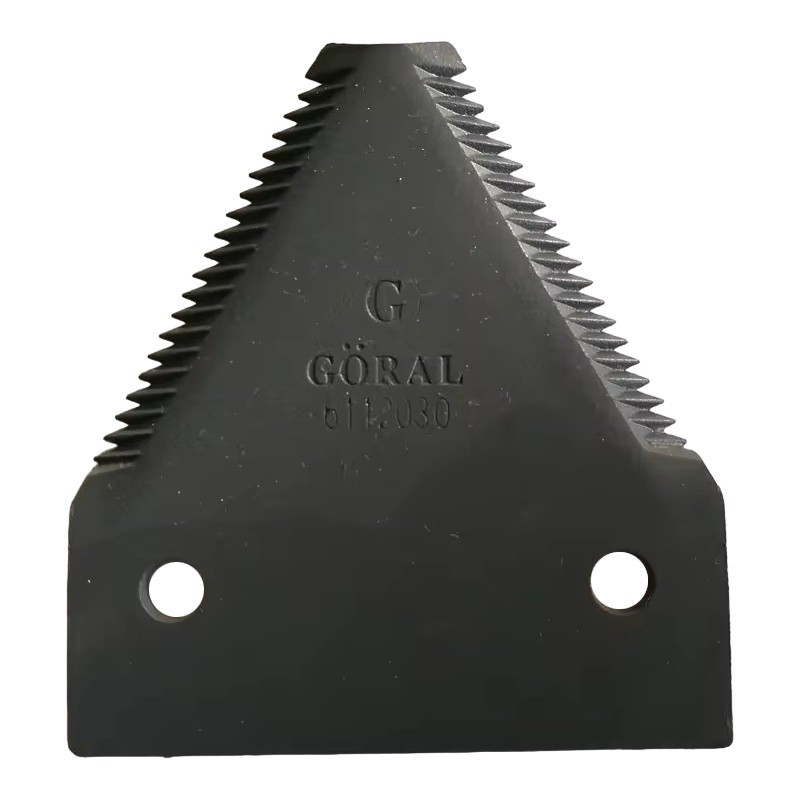

In addition to harvester blades, we also supply other types of blades, such as Easy - tear Cutting Blade and Woodworking Forming Blades. The same principles of material hardness and sharpening frequency apply to these blades as well. For example, in woodworking, a high - hardness blade can cut through dense woods without dulling quickly, while a low - hardness blade might be better for softer woods or for applications where a little flexibility is needed.
So, if you're in the market for a new blade, whether it's a harvester blade, an easy - tear cutting blade, or a woodworking forming blade, it's important to think about the material hardness and how it will impact your sharpening frequency. By making an informed decision, you can get the most out of your blade and save time and money in the long run.
If you're interested in learning more about our blades or want to discuss your specific needs, we're here to help. Reach out to us for a friendly chat and let's figure out the best blade solution for you. Whether you're a small - scale farmer or a large - scale industrial user, we have the expertise and the products to meet your requirements.
References
- "Materials Science for Engineers" by John Doe
- "Blade Technology and Applications" by Jane Smith