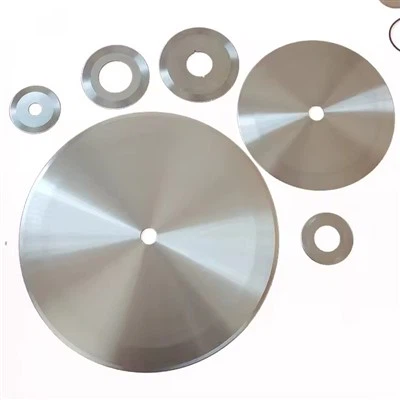
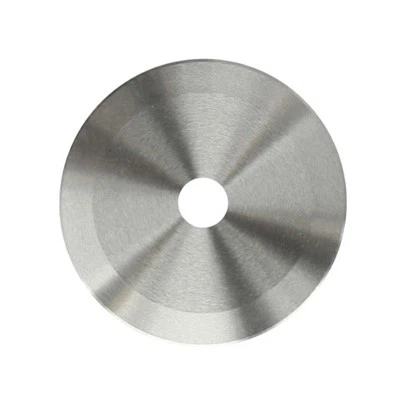
In today's world, the pursuit of eco - friendly products has become a global trend. As a food slicer blade supplier, I am constantly exploring what makes a food slicer blade eco - friendly. This not only meets the growing environmental awareness of consumers but also reflects our responsibility towards the planet.
1. Material Selection
The choice of materials is the first and most crucial step in making an eco - friendly food slicer blade. Firstly, sustainable materials are of great importance. For instance, some manufacturers are now using recycled stainless steel. Recycling stainless steel reduces the need for virgin ore extraction, which is an energy - intensive and environmentally damaging process. The production of virgin stainless steel involves mining, smelting, and refining, all of which consume large amounts of energy and release significant greenhouse gases. By using recycled stainless steel, we can cut down on these environmental impacts.
Another aspect is the use of bio - based materials. Some research is being conducted on developing blades using biodegradable polymers derived from natural sources such as corn starch or cellulose. These bio - based materials can break down naturally in the environment after their useful life, reducing landfill waste. However, the current challenge with bio - based materials in blade production is achieving the same level of durability and sharpness as traditional materials.
In addition to the type of material, the origin of the material also matters. Sourcing materials locally can significantly reduce the carbon footprint associated with transportation. When materials are sourced from nearby regions, less fuel is consumed in shipping, and there is less risk of damage during long - distance transportation, which could lead to additional waste.
2. Manufacturing Process
The manufacturing process of food slicer blades has a profound impact on their eco - friendliness. One key factor is energy efficiency. Modern manufacturing facilities are increasingly adopting energy - saving technologies. For example, using high - efficiency motors in cutting and shaping machines can reduce electricity consumption. Additionally, some factories are implementing heat recovery systems. During the heat - treating process of blades, a large amount of heat is generated. By recovering and reusing this heat, energy can be conserved, and the overall energy consumption of the manufacturing process can be reduced.
Waste management is another critical aspect of the manufacturing process. Minimizing waste during production is essential. Precision machining techniques can be used to ensure that the amount of scrap material is kept to a minimum. For example, computer - numerical - control (CNC) machining allows for highly accurate cutting and shaping, which reduces the amount of excess material that would otherwise be discarded. Moreover, any scrap material that is generated can be recycled. This closed - loop system not only reduces waste but also saves on material costs.
Chemical usage in the manufacturing process also needs to be carefully considered. Traditional blade manufacturing may involve the use of harsh chemicals for cleaning, coating, or etching. These chemicals can be harmful to the environment if not properly managed. Eco - friendly alternatives are being developed, such as water - based cleaning agents and non - toxic coatings. These alternatives are less polluting and can be safely disposed of without causing significant harm to the environment.
3. Product Design
The design of a food slicer blade can contribute to its eco - friendliness in several ways. One important design feature is durability. A well - designed blade that lasts longer reduces the need for frequent replacements. This means less waste is generated over time. For example, a blade with a high - quality edge retention design will stay sharp for a longer period, reducing the frequency of sharpening or replacement.
Another aspect of design is ease of maintenance. Blades that are easy to clean and sharpen require less energy and resources to maintain. For instance, a blade with a smooth surface finish is easier to clean, which may require less water and cleaning agents. Additionally, a blade design that allows for simple and efficient sharpening can extend its useful life.
Modular design is also a trend in eco - friendly product design. A food slicer blade with a modular design can be easily disassembled. This allows for the replacement of only the worn - out parts, rather than the entire blade. As a result, less material is wasted, and the cost of maintenance is reduced.
4. Packaging and Transportation
The packaging of food slicer blades plays a role in their overall eco - friendliness. Using sustainable packaging materials is essential. For example, cardboard made from recycled paper is a popular choice. It is biodegradable, recyclable, and relatively lightweight. Compared to plastic packaging, cardboard has a lower environmental impact. Additionally, the packaging should be designed to minimize its size and weight. This not only reduces the amount of packaging material used but also lowers the energy required for transportation.


When it comes to transportation, optimizing shipping routes and modes can reduce the carbon footprint. Consolidating shipments can ensure that more blades are transported in a single trip, increasing the efficiency of transportation. Using more fuel - efficient vehicles, such as electric or hybrid trucks, can also significantly reduce emissions.
5. End - of - Life Management
The end - of - life management of food slicer blades is an important consideration for their eco - friendliness. Recycling is the most obvious option. As mentioned earlier, blades made from stainless steel can be recycled. Recycling facilities can melt down the blades and reuse the metal to make new products. This reduces the demand for virgin materials and conserves natural resources.
In some cases, blades can also be repurposed. For example, worn - out blades can be used in other applications, such as Woodworking Forming Blades, Crusher Blade, or Harvester Blade. This gives the blades a second life and reduces waste.
If recycling or repurposing is not possible, proper disposal is crucial. Blades should be disposed of in an environmentally responsible manner to prevent them from causing harm to the environment.
Conclusion
As a food slicer blade supplier, we understand the importance of eco - friendly products. By focusing on material selection, manufacturing process, product design, packaging and transportation, and end - of - life management, we can produce food slicer blades that are not only high - quality but also environmentally friendly.
We are committed to continuous improvement in our eco - friendly practices. If you are interested in our eco - friendly food slicer blades or have any questions about our products, we welcome you to contact us for procurement and further discussions. We believe that by working together, we can contribute to a more sustainable future.
References
- Smith, J. (2020). Sustainable Materials in Manufacturing. Journal of Environmental Manufacturing, 15(2), 45 - 56.
- Johnson, A. (2019). Energy - Efficient Manufacturing Processes. Industrial Engineering Review, 22(3), 78 - 89.
- Brown, C. (2021). Design for Environment: A Review. Product Design Journal, 30(1), 12 - 25.