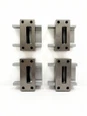
In aluminum machining and milling scenarios, the material selection and inherent characteristics of the end mill holder directly influence machining stability, with core metrics being critical in determining whether the holder is suitable. For those new to the field who want to choose and use the right tool holder effectively, mastering these three core aspects is essential!
I. Mainstream Materials: Preferred Solutions for Aluminum Processing
Alloy Steel: The king of cost-effectiveness. After quenching and tempering treatment, it offers strong rigidity and sufficient toughness, capable of withstanding the cutting impact forces during aluminum processing. It is resistant to deformation and suitable for conventional batch production.
•Carbide: High hardness, excellent wear resistance, and good thermal stability. It maintains precision even under high temperatures generated during high-speed milling of aluminum, making it suitable for high-precision, high-speed machining scenarios.
•Titanium Alloy: Outstanding lightweight advantage, balanced rigidity and toughness, reduces spindle load, and meets the high-speed cutting demands of aluminum processing, balancing efficiency and tool life.
⒈Stable Clamping: To address aluminum's tendency to stick to cutting tools and its low cutting resistance, the tool holder design often incorporates high-precision clamping structures that reduce tool runout and prevent burrs on machined surfaces.
2.Optimized Chip Evacuation: Some tool holders feature an optimized external design with ample chip clearance space, meeting the high-speed chip evacuation requirements of aluminum machining to prevent chip accumulation from affecting the process.
3.High Adaptability: Compatible with various specifications of end mills and different machine tool spindles, these tool holders offer flexible adaptation for both conventional milling machines and high-speed machining centers.
4.Extended Lifespan: Made of high-quality materials and treated with special surface coatings for corrosion and wear resistance, these tool holders achieve a service life over 30% longer than standard holders under the mild working conditions of aluminum machining.
III. Essential Core Indicators to Watch
Concentricity: Error must be controlled within 0.005mm, directly determining the machining accuracy of aluminum parts and preventing dimensional deviations.
Clamping Precision: Radial runout ≤ 0.01mm, ensuring the tool is firmly fixed and reducing vibration during cutting
Rigidity Strength: Must withstand centrifugal forces under high-speed rotation to prevent tool holder deformation and ensure machining stability.
Adaptable Speed Range: Conventional aluminum machining requires support for 8000-20,000 rpm to meet high-speed cutting demands.
Choosing the right end mill holder can double the precision and efficiency of aluminum processing! Keep these key points in mind to avoid blind pitfalls during selection.