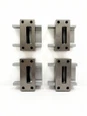
The performance of crusher blade materials directly determines the service life, crushing efficiency, and applicable material range of the blades. It also affects the operational stability of the equipment and the comprehensive use cost. The core impacts are as follows:
1.Hardness
The higher the hardness, the less likely the cutting edge is to become dull, and it can maintain sharpness for a long time, making it suitable for crushing hard materials such as ores and metals. However, excessively high hardness will reduce toughness, making it prone to chipping.
2.Toughness
Blades with strong toughness can withstand impact loads, handle high-toughness materials containing foreign objects such as tires and bulky waste, and avoid blade breakage; insufficient toughness makes them unsuitable for high-impact crushing scenarios.
3.Wear resistance
Materials with good wear resistance (such as alloy tool steel and cemented carbide) can resist frictional wear from materials, extend the blade replacement cycle, and reduce downtime maintenance costs; ordinary carbon steel with poor wear resistance is only suitable for short-term crushing of soft materials.
4.Fatigue resistance
Materials with excellent fatigue resistance can withstand high-frequency shearing and impact, are not prone to micro-cracks, and ensure long-term continuous operation; blades with poor fatigue resistance are prone to early fracture, increasing the risk of use.
5.Corrosion resistance
Corrosion-resistant materials such as stainless steel are suitable for crushing clean or corrosive materials in food, medicine, chemical and other industries, avoiding material contamination; ordinary steel does not have this property and is prone to rusting and failure.