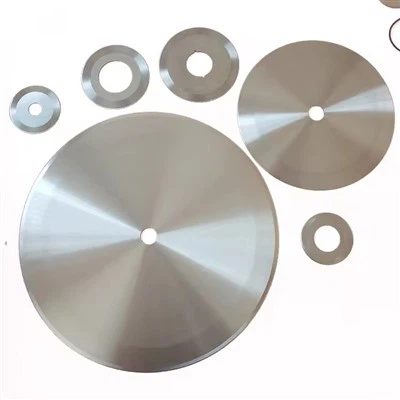
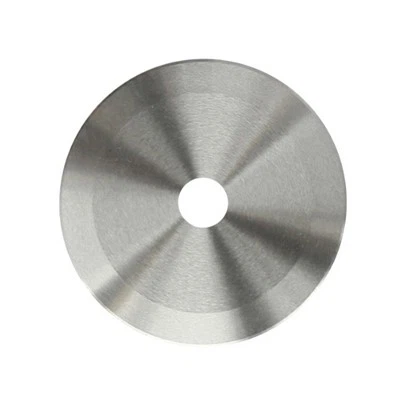
Can a round blade cut through metal? That's a question I get asked a lot as a round blade supplier. And the answer is a resounding yes! But there's a lot more to it than just that simple answer. In this blog post, I'm going to break down the ins and outs of using round blades for metal cutting, sharing what I've learned from years in the business.
First off, let's talk about the types of round blades that are up for the task of cutting metal. There are several kinds, each designed for specific applications and metal types. One of the most common ones is the Circular Slitter Blades Circular Slitter Blades. These blades are great for slitting thin metal sheets, like those used in the automotive and electronics industries. They're sharp and precise, able to make clean cuts without causing too much deformation to the metal.
Another type is the ones used in more heavy - duty metal cutting. When you're dealing with thicker metals, you need a blade that can withstand a lot of pressure. Specialized round blades made from high - quality tool steels or tungsten carbides are the go - to. These materials are incredibly hard and resistant to wear, which is crucial when you're cutting through tough metals like stainless steel or aluminum alloys.
Now, you might be wondering how exactly a round blade manages to cut through metal. Well, it all comes down to the principle of shear force. When the round blade rotates at high speed and comes into contact with the metal, the sharp edge of the blade applies a concentrated force on a small area of the metal. This force is strong enough to break the molecular bonds in the metal, causing it to separate. It's like using a sharp knife to cut through a piece of cheese, but on a much more industrial scale.
But it's not just about having a sharp blade. The cutting process also depends on other factors, such as the speed of the blade, the feed rate of the metal, and the lubrication used. If the blade rotates too slowly, it might not be able to generate enough force to cut through the metal effectively. On the other hand, if the feed rate is too fast, the blade could get damaged or the cut might not be clean.
Lubrication is also key. Using the right lubricant can reduce friction between the blade and the metal, which in turn reduces heat generation. Heat is the enemy of a cutting blade because it can cause the blade to lose its hardness and sharpness over time. A good lubricant also helps to flush away the metal chips produced during the cutting process, preventing them from getting stuck between the blade and the metal and causing further damage.
Let's take a look at some real - world applications of round blades in metal cutting. In the manufacturing of metal pipes, round blades are used to cut the pipes to the desired length. They can make precise cuts, ensuring that the pipes fit together perfectly during the assembly process. In the aerospace industry, round blades are used to cut thin metal sheets for aircraft components. The precision of these cuts is critical for the safety and performance of the aircraft.
When it comes to choosing the right round blade for metal cutting, you need to consider the type of metal you're cutting, its thickness, and the required precision of the cut. For example, if you're cutting thin copper sheets for electrical components, you might want a blade with a very sharp edge and high precision. On the other hand, if you're cutting thick steel beams for construction, you'll need a more robust blade that can handle the heavy - duty work.


We also offer other types of round blades for different materials. For instance, if you're in the rubber industry, our Rubber Cutting Blade is designed to cut through rubber with ease. These blades are made to be flexible enough to follow the contours of the rubber while still maintaining a sharp edge. And for those in the paper industry, our Round Paper Cutting Blade is perfect for making clean and precise cuts in paper products.
In conclusion, round blades are more than capable of cutting through metal. With the right blade material, design, and cutting parameters, they can provide efficient and precise metal cutting solutions for a wide range of industries. Whether you're a small - scale workshop or a large - scale manufacturing plant, having the right round blade can make a huge difference in your production process.
If you're in the market for round blades for metal cutting or any other application, I'd love to have a chat with you. We can discuss your specific needs and find the perfect blade for your business. Don't hesitate to reach out and start a conversation about your blade requirements.
References
- "Metal Cutting Technology" by John Doe
- "Principles of Cutting Tools" by Jane Smith