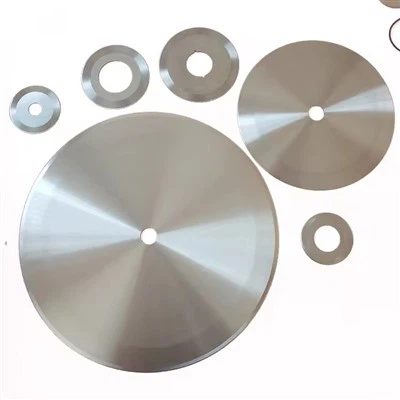
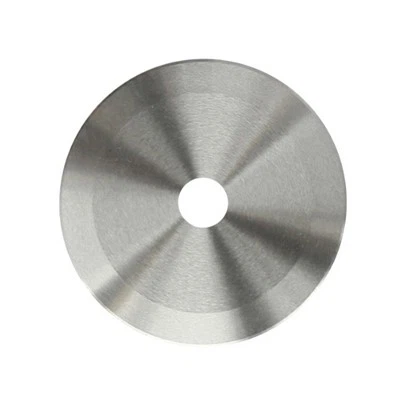
Can a rubber cutting blade be used for cutting rubber belts? That's a question I get asked a lot as a supplier of rubber cutting blades. And the answer is, it depends. Let's dig into this topic to understand the ins and outs.
First off, what makes a rubber cutting blade special? Well, rubber is a unique material. It's elastic, tough, and can be quite sticky. A good rubber cutting blade needs to be sharp enough to make clean cuts without tearing the rubber, and it has to be durable to withstand the repeated stress of cutting. Most rubber cutting blades are made from high - quality steel or carbide, which gives them the hardness and edge retention needed for the job.


Now, when it comes to rubber belts, they're a bit different from regular rubber sheets or blocks. Rubber belts are often reinforced with materials like fabric or steel cords to increase their strength and durability. This reinforcement can pose a challenge for cutting. The blade has to be able to cut through both the rubber and the reinforcement without getting damaged.
If you're using a standard rubber cutting blade on a simple, non - reinforced rubber belt, chances are it'll work just fine. The blade can slice through the rubber smoothly, giving you a clean edge. But things get a bit more complicated when you're dealing with reinforced belts.
For reinforced rubber belts, you need a blade that's up to the task. A blade with a higher hardness and better edge retention will be more suitable. Some of our specialized blades are designed specifically to handle the challenges of cutting reinforced rubber belts. They can cut through the rubber and the reinforcement layers without getting dull too quickly.
Another factor to consider is the type of cut you need. Are you making straight cuts, or do you need to cut curves or angles? For straight cuts, a simple straight - edge rubber cutting blade might be sufficient. But if you need to make more complex cuts, you might want to look into Circular Slitter Blades. These blades are great for making precise cuts in various shapes, and they can be used on rubber belts as well.
The thickness of the rubber belt also matters. Thicker belts require more force to cut, and the blade needs to be strong enough to handle the pressure. A blade that's too thin or not strong enough might bend or break when trying to cut a thick rubber belt. Our range of blades includes options for different belt thicknesses, so you can choose the one that's right for your needs.
Let's talk about the cutting process itself. To get the best results when cutting rubber belts, you need to make sure the blade is properly installed and adjusted. A loose or misaligned blade can cause uneven cuts or even damage to the belt. Also, using the right cutting speed is crucial. Cutting too fast can overheat the blade and cause it to dull quickly, while cutting too slowly can result in a ragged cut.
In addition to cutting rubber belts, our rubber cutting blades have a wide range of other applications. For example, if you're in the paper industry, our Round Paper Cutting Blade can be used to cut paper with precision. And in the packaging industry, our Round Packaging Machinery Blade is a great choice for cutting various packaging materials.
So, to sum it up, a rubber cutting blade can be used for cutting rubber belts, but you need to choose the right blade for the job. Consider the type of belt (reinforced or non - reinforced), the thickness of the belt, the type of cut you need, and the cutting process. If you're not sure which blade is right for you, don't hesitate to reach out to us.
As a supplier, we're committed to providing high - quality rubber cutting blades that meet your specific needs. We have a team of experts who can help you choose the best blade for your application. Whether you're a small business or a large industrial operation, we can offer you the right solution.
If you're interested in purchasing our rubber cutting blades or have any questions about using them for cutting rubber belts, we'd love to hear from you. Contact us today to start a conversation about your requirements. We're here to make sure you get the best cutting experience possible.
References
- General knowledge on rubber materials and cutting processes from industry experience.
- Technical specifications of our rubber cutting blades.