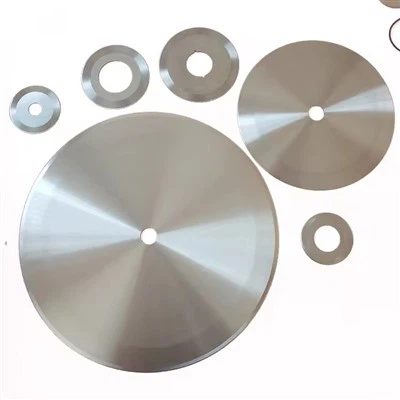
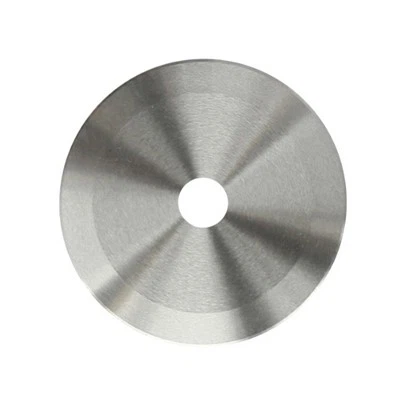
In the realm of cutting tools, the choice between easy - tear cutting blades and guillotine cutting blades can significantly impact the efficiency, quality, and cost - effectiveness of various cutting operations. As a supplier of easy - tear cutting blades, I am well - versed in the features, advantages, and limitations of both types of blades, and I'm excited to share my insights in this blog.
Understanding the Basics
Let's first delve into what each type of blade is. Guillotine cutting blades are a classic design. They operate in a manner similar to a traditional guillotine, where a sharp blade descends vertically onto the material to be cut. These blades are typically made of high - quality steel, and their cutting edge is precisely ground to ensure a clean, straight cut. They are commonly used in industries such as paper manufacturing, packaging, and textile processing, where large - scale, straight - line cutting is required.
On the other hand, easy - tear cutting blades are designed to create a perforated or weakened line on the material, making it easy to tear along that line. These blades often have a series of small teeth or notches that create the perforations. They are widely used in applications where the end - user needs to separate parts of the material easily, such as in the packaging of food products, medical bags, and labels.
Cutting Precision
When it comes to cutting precision, guillotine cutting blades excel in creating straight, clean cuts. Their vertical motion and sharp edge ensure that the cut is consistent along the entire length of the material. This is crucial in industries where accuracy is of the essence, like in the production of paper documents or precise textile patterns. For instance, in a printing press, a guillotine blade can cut stacks of paper with high precision, ensuring that all the pages are of the same size.
However, easy - tear cutting blades have a different kind of precision. They are engineered to create uniform perforations at a specific spacing. This precision is vital for the intended functionality of easy - tearing. For example, in the production of Round Corner Cutting Knife For Medicine Bags, the easy - tear blade must create perforations that are neither too weak (which could cause premature tearing) nor too strong (which would make it difficult for the user to tear).
Material Compatibility
Guillotine cutting blades are suitable for a wide range of materials, including paper, cardboard, plastics, and thin metals. Their sharp edge can easily slice through these materials, regardless of their thickness or texture. In the packaging industry, guillotine blades are used to cut cardboard boxes, plastic sheets for blister packs, and even thin aluminum foils.
Easy - tear cutting blades, on the other hand, are more commonly used with flexible materials such as paper, plastic films, and thin textiles. These materials are more amenable to the perforation process. For example, in the production of Mask Machine Blades, easy - tear blades can create perforations on the elastic bands or the mask material itself, allowing for easy adjustment and removal by the user.
Cutting Speed
In terms of cutting speed, guillotine cutting blades can perform high - volume cutting operations relatively quickly. Their vertical motion allows for rapid, repeated cuts, making them ideal for mass production. In a large - scale paper mill, a guillotine blade can cut thousands of sheets of paper per hour, ensuring a high - throughput production process.
Easy - tear cutting blades, while they may not be as fast as guillotine blades in terms of pure cutting speed, offer a different advantage. The perforation process they perform is often integrated into the manufacturing process at a slower, more controlled pace. This is because the quality of the perforations is crucial, and a slower speed ensures that each perforation is accurately formed. For example, in the production of food packaging, the easy - tear blade will work in sync with the packaging machine to create the necessary perforations without compromising the integrity of the package.
Cost - effectiveness
Guillotine cutting blades are generally more expensive to purchase initially. This is due to their complex manufacturing process, which involves high - precision grinding and heat - treatment to ensure a sharp and durable cutting edge. However, in the long run, they can be cost - effective for high - volume production. Their durability means that they do not need to be replaced frequently, and their high cutting speed can increase overall productivity, reducing the cost per unit of production.
Easy - tear cutting blades, on the other hand, are often more affordable to purchase. Their design is relatively simpler, and they do not require the same level of precision grinding as guillotine blades. Additionally, since they are used in applications where the focus is on functionality rather than high - speed mass production, they can be a cost - effective solution for many small to medium - sized businesses. For example, a local food packaging company may find that using easy - tear blades for their product packaging is a more budget - friendly option.
Safety Considerations
Guillotine cutting blades pose a significant safety risk. Their large, sharp blade and powerful vertical motion can cause serious injuries if not properly operated. Special safety guards and training are required for operators to ensure safe use. In a factory setting, strict safety protocols must be in place to prevent accidents.


Easy - tear cutting blades are generally safer to use. Their smaller size and the nature of the perforation process mean that the risk of serious injury is lower. However, like any cutting tool, proper handling and safety precautions are still necessary.
Application - specific Advantages
Guillotine cutting blades are the go - to choice for applications where straight, clean cuts are required. They are used in the manufacturing of books, magazines, and cardboard boxes. Their ability to cut through thick materials with precision makes them indispensable in these industries.
Easy - tear cutting blades, as mentioned earlier, are ideal for applications where easy separation of materials is needed. They are used in the production of food packaging, where consumers need to open the package easily. They are also used in the medical industry, for example, in the packaging of Mask Machine Blades and other medical supplies, where easy access to the product is crucial.
Maintenance Requirements
Guillotine cutting blades require regular maintenance to keep them in optimal condition. This includes sharpening the blade, lubricating the moving parts, and inspecting for any signs of wear or damage. The maintenance process can be time - consuming and may require specialized equipment.
Easy - tear cutting blades are generally easier to maintain. They do not need to be sharpened as frequently as guillotine blades, and their simpler design means that maintenance is less complex. However, they still need to be inspected regularly to ensure that the perforations are being created correctly.
Conclusion
In conclusion, both easy - tear cutting blades and guillotine cutting blades have their unique advantages and are suitable for different applications. Guillotine cutting blades offer high - precision, straight - line cutting, high - speed production, and are ideal for a wide range of materials. Easy - tear cutting blades, on the other hand, provide functionality in terms of easy separation of materials, are more cost - effective for many applications, and are generally safer and easier to maintain.
As a supplier of easy - tear cutting blades, I understand the specific needs of different industries. Whether you are a food packaging company, a medical supplies manufacturer, or a label printer, our easy - tear cutting blades can provide the functionality and cost - effectiveness you need. If you are interested in learning more about our easy - tear cutting blades or would like to discuss your specific cutting requirements, I encourage you to reach out to us for a detailed consultation and procurement discussion. We are committed to providing high - quality cutting solutions tailored to your needs.
References
- "Cutting Tool Handbook" by The American Society of Mechanical Engineers
- Industry reports on packaging and manufacturing technologies
- Technical specifications from blade manufacturers