What is the cutting efficiency of circular slitter blades?
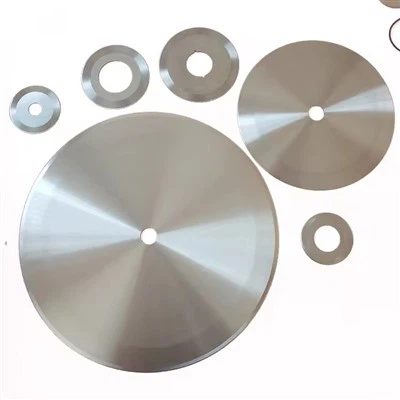
As a supplier of circular slitter blades, I've had the privilege of witnessing firsthand the pivotal role these blades play in various industries. Cutting efficiency is a multifaceted concept that encompasses several key factors, each contributing to the overall performance of circular slitter blades. In this blog, we'll delve into the intricacies of cutting efficiency, exploring what it means, the factors that influence it, and how our circular slitter blades are designed to optimize it.
Defining Cutting Efficiency
Cutting efficiency can be defined as the ability of a circular slitter blade to cut through materials accurately, cleanly, and rapidly while minimizing energy consumption and blade wear. It's a measure of how effectively the blade can perform its intended function, and it's influenced by a variety of factors, including blade design, material properties, cutting conditions, and maintenance.
Factors Influencing Cutting Efficiency
Blade Design
The design of a circular slitter blade is crucial to its cutting efficiency. Factors such as blade diameter, thickness, tooth geometry, and edge sharpness all play a role in determining how well the blade can cut through materials. For example, a blade with a larger diameter may be able to cut through thicker materials more easily, while a blade with a thinner profile may be more suitable for precision cutting. Additionally, the tooth geometry of the blade can affect the cutting force required and the quality of the cut. A blade with sharp, well-defined teeth will generally cut more cleanly and efficiently than a blade with dull or worn teeth.
Material Properties
The properties of the material being cut also have a significant impact on cutting efficiency. Different materials have different hardness, toughness, and abrasiveness, which can affect how easily the blade can cut through them. For example, cutting through a soft, ductile material like paper or plastic may require a different blade design and cutting parameters than cutting through a hard, brittle material like metal or glass. Additionally, the surface finish of the material can also affect the cutting process. A smooth, polished surface may require less cutting force than a rough, textured surface.


Cutting Conditions
The cutting conditions, such as cutting speed, feed rate, and cutting pressure, can also influence cutting efficiency. Cutting speed refers to the speed at which the blade rotates, while feed rate refers to the speed at which the material is fed into the blade. Cutting pressure refers to the force applied to the blade during the cutting process. Optimizing these cutting conditions can help to improve cutting efficiency and reduce blade wear. For example, increasing the cutting speed may increase the cutting efficiency, but it may also increase the blade wear. Similarly, increasing the feed rate may increase the productivity, but it may also require more cutting force and increase the risk of blade breakage.
Maintenance
Proper maintenance of circular slitter blades is essential for ensuring optimal cutting efficiency. Regular cleaning, sharpening, and inspection of the blades can help to prevent blade wear and damage, and ensure that the blades are performing at their best. Additionally, using the correct lubricants and coolants can help to reduce friction and heat generation during the cutting process, which can also improve cutting efficiency and extend the life of the blades.
How Our Circular Slitter Blades Optimize Cutting Efficiency
At our company, we understand the importance of cutting efficiency, and we've designed our circular slitter blades to optimize it. Our blades are made from high-quality materials, such as high-speed steel and carbide, which are known for their hardness, toughness, and wear resistance. Additionally, our blades are precision-engineered to ensure that they have the correct blade diameter, thickness, tooth geometry, and edge sharpness for the specific application.
We also offer a range of blade coatings and treatments that can further improve the cutting efficiency and performance of our blades. For example, our blades can be coated with titanium nitride (TiN), titanium carbonitride (TiCN), or diamond-like carbon (DLC) to increase their hardness, wear resistance, and lubricity. These coatings can help to reduce friction and heat generation during the cutting process, which can improve cutting efficiency and extend the life of the blades.
In addition to our high-quality blades, we also offer a range of services to help our customers optimize their cutting processes. Our technical support team can provide advice on blade selection, cutting conditions, and maintenance, and we also offer blade sharpening and reconditioning services to ensure that our customers' blades are always performing at their best.
Applications of Circular Slitter Blades
Circular slitter blades are used in a wide range of industries, including paper and packaging, plastics, textiles, metals, and food processing. In the paper and packaging industry, circular slitter blades are used to cut paper, cardboard, and other packaging materials into various sizes and shapes. In the plastics industry, circular slitter blades are used to cut plastic films, sheets, and tubes. In the textiles industry, circular slitter blades are used to cut fabrics, yarns, and fibers. In the metals industry, circular slitter blades are used to cut metal sheets, bars, and tubes. In the food processing industry, circular slitter blades are used to cut food products, such as meat, cheese, and bread.
Conclusion
Cutting efficiency is a critical factor in the performance of circular slitter blades. By understanding the factors that influence cutting efficiency and optimizing the blade design, material properties, cutting conditions, and maintenance, we can ensure that our circular slitter blades are performing at their best. At our company, we're committed to providing our customers with high-quality circular slitter blades that are designed to optimize cutting efficiency and meet their specific needs.
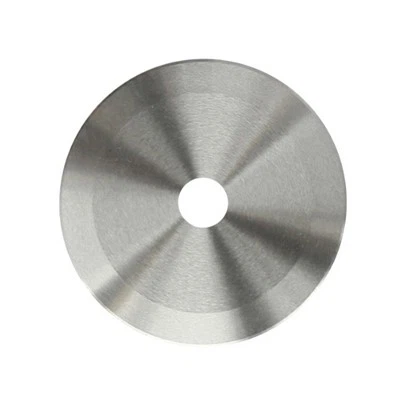
If you're interested in learning more about our Circular Slitter Blades, Round Paper Cutting Blade, or Round Packaging Machinery Blade, or if you have any questions or concerns about cutting efficiency, please don't hesitate to contact us. We'd be happy to discuss your requirements and provide you with a customized solution.
References
- "Cutting Tool Engineering Handbook", Society of Manufacturing Engineers.
- "Metal Cutting Principles", Peter Oxley.
- "Handbook of Machining with Cutting Tools", Yuri Kuznetsov.