What is the cutting speed variation with different rubber hardnesses for a rubber cutting saw blade?
As a supplier of rubber cutting saw blades, I've witnessed firsthand the intricate relationship between rubber hardness and cutting speed. This relationship is crucial for businesses in the rubber processing industry, as it directly impacts productivity, quality, and cost - effectiveness. In this blog, I'll delve into the science behind how different rubber hardnesses affect the cutting speed of our rubber cutting saw blades.


Understanding Rubber Hardness
Rubber hardness is typically measured using the Shore durometer scale. The Shore scale has different types, with Shore A being commonly used for softer rubbers and Shore D for harder ones. Softer rubbers, with a lower Shore A value (e.g., 20 - 40 Shore A), are more flexible and elastic. They can deform easily under pressure. On the other hand, harder rubbers, with a higher Shore D value (e.g., 60 - 90 Shore D), are more rigid and less likely to deform.
Cutting Speed and Soft Rubbers
When it comes to cutting soft rubbers, the cutting speed can be relatively high. Soft rubbers offer less resistance to the saw blade. The blade can easily penetrate the rubber material, and the cutting process is generally smoother. The flexibility of the soft rubber allows it to conform to the movement of the blade, reducing the chances of chipping or tearing.
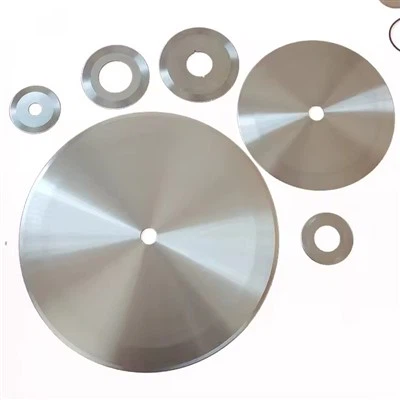
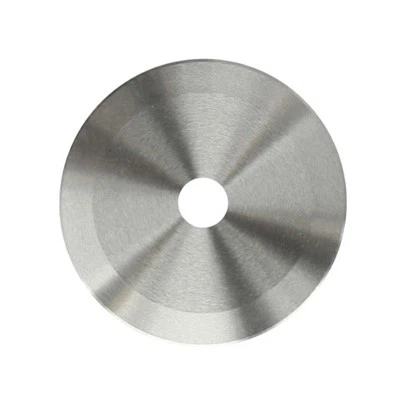
However, there are some challenges. Soft rubbers tend to stick to the saw blade. This can lead to a build - up of rubber on the blade, which may slow down the cutting process over time. To counter this, our rubber cutting saw blades are designed with special coatings that reduce friction and prevent rubber adhesion. With these blades, businesses can maintain a high cutting speed even when dealing with soft rubbers. For example, in applications where soft rubber gaskets are being cut, our blades can achieve a cutting speed that maximizes production output.
Cutting Speed and Hard Rubbers
Cutting hard rubbers is a different ballgame. Hard rubbers have a high resistance to deformation, which means the saw blade has to work harder to penetrate and cut through the material. As a result, the cutting speed is generally lower compared to soft rubbers. The blade may experience more wear and tear due to the high - stress cutting environment.
To optimize the cutting speed for hard rubbers, our saw blades are made from high - quality materials with excellent hardness and toughness. The teeth of the blade are carefully designed to have the right shape and angle to efficiently cut through the hard rubber. For instance, in the production of hard rubber seals, our blades can still achieve a reasonable cutting speed while ensuring a clean and precise cut.
Factors Affecting the Relationship
Several factors can influence the relationship between rubber hardness and cutting speed. One of the key factors is the type of saw blade. A well - designed blade with the appropriate tooth geometry and material can significantly improve the cutting speed for both soft and hard rubbers.
The cutting machine also plays a role. A high - powered and stable cutting machine can provide the necessary force and precision to maintain a good cutting speed. Additionally, the feed rate, which is the speed at which the rubber is fed into the saw blade, needs to be adjusted according to the rubber hardness. For soft rubbers, a higher feed rate can be used, while for hard rubbers, a lower feed rate may be required to avoid overloading the blade.
Industry Applications
The knowledge of how rubber hardness affects cutting speed is essential in various industries. In the automotive industry, rubber components such as seals and gaskets are made from rubbers of different hardnesses. Our rubber cutting saw blades are used to cut these components with the right cutting speed, ensuring high - quality products.
In the manufacturing of consumer goods, like rubber mats and footwear soles, different rubber hardnesses are used to meet different functional requirements. Our blades can be adjusted to cut these materials at the optimal speed, improving production efficiency.
Related Products
If you're in the market for other types of blades, we also offer a range of high - quality products. Check out our Meat Slicer Blade, which is designed for precise and efficient meat slicing. Our Sealing Machine Blade is ideal for sealing applications, providing a clean and reliable cut. And for those in need of a versatile blade, our Toothed Blade is a great choice.
Conclusion
In conclusion, the cutting speed of a rubber cutting saw blade varies significantly with different rubber hardnesses. Soft rubbers generally allow for higher cutting speeds but come with the challenge of adhesion, while hard rubbers require a lower cutting speed due to their high resistance. Our company, as a leading supplier of rubber cutting saw blades, has developed innovative solutions to optimize the cutting speed for all types of rubber hardnesses.
If you're looking to improve the efficiency of your rubber cutting operations, we're here to help. Our team of experts can provide you with the right blade recommendations based on your specific rubber hardness and cutting requirements. Contact us today to start a discussion about your procurement needs and take your rubber cutting process to the next level.
References
- ASTM D2240 - 15, “Standard Test Method for Rubber Property - Durometer Hardness,” ASTM International, West Conshohocken, PA, 2015.
- Kalpakjian, S., & Schmid, S. R. (2010). Manufacturing Engineering and Technology. Pearson Prentice Hall.