In the realm of industrial manufacturing, rubber cutting blades play a pivotal role. As a seasoned rubber cutting blade supplier, I've witnessed firsthand the critical importance of blade hardness in the performance and longevity of these essential tools. In this blog post, I'll delve into the concept of hardness in rubber cutting blades, exploring what it means, why it matters, and how to choose the right hardness for your specific applications.
Understanding Hardness in Rubber Cutting Blades
Hardness, in the context of a rubber cutting blade, refers to the blade's resistance to deformation, wear, and indentation. It is a fundamental property that directly impacts the blade's ability to cut through rubber materials effectively. There are several methods to measure hardness, with the Rockwell and Vickers scales being the most commonly used in the blade manufacturing industry.
The Rockwell scale measures hardness by indenting the material with a specified indenter under a particular load. The depth of the indentation is then used to determine the hardness value. The Vickers scale, on the other hand, uses a square-based pyramid indenter and measures the size of the indentation left on the material after a specific load is applied.
Why Hardness Matters
The hardness of a rubber cutting blade is crucial for several reasons. Firstly, a blade with the appropriate hardness can maintain its sharp edge for a longer period. When cutting rubber, which can be a tough and abrasive material, a blade that is too soft will quickly dull, leading to inconsistent cuts, increased production time, and higher costs due to frequent blade replacements.
Secondly, hardness affects the blade's ability to withstand the forces generated during the cutting process. A blade that is too soft may deform under pressure, causing it to cut inaccurately or even break. On the other hand, an overly hard blade can be brittle and prone to chipping or cracking, also resulting in poor cutting performance and a shorter blade lifespan.
Thirdly, the right hardness ensures that the blade can cut through different types of rubber materials. Rubber comes in various formulations, from soft and flexible to hard and dense. A blade with the correct hardness can adapt to these different materials, providing clean and precise cuts every time.
Factors Affecting Blade Hardness
Several factors can influence the hardness of a rubber cutting blade. The type of steel used in the blade's construction is one of the most significant factors. Different steel alloys have different compositions, which can affect their hardness, toughness, and corrosion resistance. For example, high-carbon steels are generally harder but less tough than low-carbon steels.
The heat treatment process is another crucial factor. Heat treatment involves heating the blade to a specific temperature and then cooling it at a controlled rate. This process can significantly alter the blade's hardness and other properties. Proper heat treatment can optimize the blade's hardness, ensuring that it is hard enough to maintain its edge but not so hard that it becomes brittle.
The manufacturing process also plays a role in determining the blade's hardness. Precision machining techniques can ensure that the blade has a uniform hardness throughout its structure. Any inconsistencies in the manufacturing process can lead to variations in hardness, which can affect the blade's performance.
Choosing the Right Hardness for Your Application
Selecting the right hardness for a rubber cutting blade depends on several factors, including the type of rubber material being cut, the cutting method, and the specific requirements of your application.
For soft rubber materials, such as natural rubber or silicone rubber, a blade with a relatively lower hardness may be sufficient. A softer blade can provide a clean cut without causing excessive wear on the blade or the rubber material. However, for harder rubber materials, such as EPDM or neoprene, a blade with a higher hardness is usually required to maintain its cutting performance.
The cutting method also influences the choice of blade hardness. For example, in a rotary cutting application, where the blade rotates at high speeds, a harder blade may be needed to withstand the centrifugal forces and maintain its sharpness. In a guillotine cutting application, where the blade makes a straight, linear cut, a slightly softer blade may be more suitable.
It's also important to consider the specific requirements of your application. If you need a blade that can make precise and intricate cuts, a harder blade may be necessary to ensure accuracy. If you're cutting large volumes of rubber, a blade with good wear resistance and a longer lifespan may be more important.
Our Range of Rubber Cutting Blades
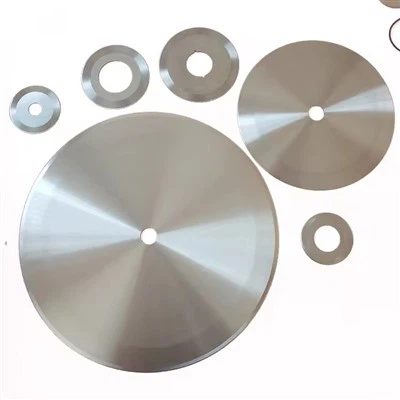
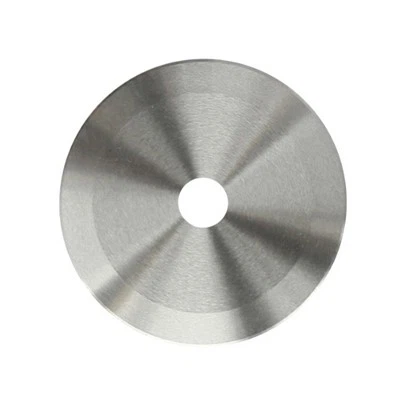
As a leading rubber cutting blade supplier, we offer a wide range of blades with different hardness levels to meet the diverse needs of our customers. Our Rubber Cutting Blade products are manufactured using high-quality steel alloys and advanced heat treatment processes to ensure optimal hardness and performance.
We also provide Round Packaging Machinery Blade, which are designed for use in packaging machinery for cutting rubber components used in the packaging industry. These blades are engineered to provide precise and efficient cuts, ensuring that your packaging operations run smoothly.
In addition, our Rubber Cutting Blade factory is equipped with state-of-the-art manufacturing facilities and a team of experienced technicians. We can customize blades to your specific requirements, including hardness, size, and shape, to ensure that you get the perfect blade for your application.
Conclusion
In conclusion, the hardness of a good rubber cutting blade is a critical factor that directly impacts its performance, longevity, and suitability for different applications. By understanding the concept of hardness, the factors that affect it, and how to choose the right hardness for your specific needs, you can ensure that you get the most out of your rubber cutting blades.


As a trusted rubber cutting blade supplier, we are committed to providing our customers with high-quality blades that offer the perfect balance of hardness, toughness, and cutting performance. If you're looking for a reliable and efficient rubber cutting solution, don't hesitate to contact us for more information and to discuss your specific requirements. We look forward to working with you to find the best blade for your business.
References
- "Metallurgy for the Non-Metallurgist" by John D. Verhoeven
- "Cutting Tool Engineering Handbook" by Robert K. Kremer
- Industry reports on rubber cutting blade technology and applications