Hey there! As a supplier of circular slitter blades, I often get asked about the noise level when using these blades. It's a crucial question, especially for those working in industrial settings where noise can be a major concern. In this blog, I'll share some insights on what the noise level is like when using circular slitter blades and what factors can affect it.
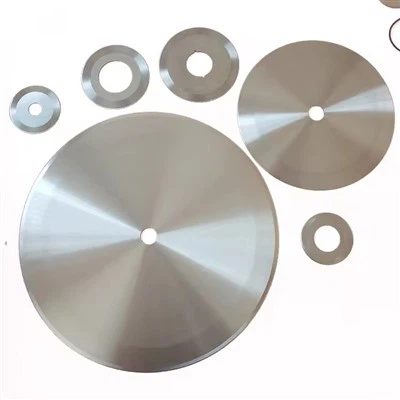
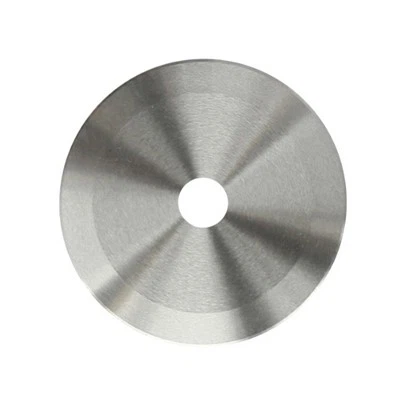
First off, let's talk about what circular slitter blades are. Circular slitter blades are used in a variety of industries, including paper, plastic, metal, and textile. They're designed to cut through materials with precision and efficiency. Whether you're cutting paper into sheets or slitting plastic films, circular slitter blades are a go - to tool. You can learn more about them on our website: Circular Slitter Blades.
Now, to the main topic: noise level. The noise generated when using circular slitter blades can vary depending on several factors. One of the most significant factors is the speed at which the blades are rotating. Generally, the faster the blades spin, the louder the noise. This is because higher rotational speeds create more friction and vibration, which in turn produce more sound. For example, in a high - speed paper cutting operation, where the circular slitter blades are spinning at a very rapid pace, the noise can be quite intense.
Another factor that affects the noise level is the type of material being cut. Different materials have different properties, and these properties can influence how much noise is produced during the cutting process. Harder materials like metal tend to generate more noise than softer materials like paper. When cutting metal, the blades have to work harder to penetrate the material, which results in more forceful contact and thus more noise. On the other hand, cutting paper is a relatively quieter process as the blades can glide through the material more smoothly. If you're in the paper - cutting business, you might be interested in our Round Paper Cutting Blade.
The quality of the circular slitter blades also plays a role in the noise level. High - quality blades are designed to cut more smoothly and with less vibration. They're made from better materials and have more precise manufacturing tolerances. This means that they can cut through materials with less resistance, resulting in less noise. Cheaper, lower - quality blades may be more prone to uneven cutting, which can cause increased vibration and noise. So, investing in good - quality circular slitter blades can not only improve the cutting performance but also reduce the noise level in your workplace. Check out our range of Circular Slitter Blades.
The design of the cutting equipment also impacts the noise. A well - designed machine with proper vibration dampening and noise - reducing features can significantly lower the overall noise level. For instance, some machines are equipped with sound - absorbing materials or special enclosures that help to contain the noise. Additionally, the alignment of the blades within the machine is crucial. If the blades are not properly aligned, they can cause uneven cutting and excessive vibration, leading to louder noise.
So, what's the typical noise level when using circular slitter blades? Well, it's hard to give an exact number as it depends on all the factors we've discussed above. However, in a normal industrial setting, the noise level can range from around 70 decibels (dB) for a relatively slow - speed, low - stress cutting operation to over 100 dB for high - speed, heavy - duty cutting. To put this into perspective, 70 dB is about as loud as a vacuum cleaner, while 100 dB is comparable to a chainsaw. Prolonged exposure to noise levels above 85 dB can cause hearing damage, so it's important to take appropriate measures to protect your ears if you're working around circular slitter blades.
There are several ways to reduce the noise level when using circular slitter blades. One of the simplest ways is to wear hearing protection, such as earplugs or earmuffs. This can significantly reduce the amount of noise that reaches your ears. Another way is to optimize the cutting process. This includes adjusting the blade speed to the appropriate level for the material being cut, ensuring proper blade alignment, and using high - quality blades. You can also consider upgrading your cutting equipment to models with better noise - reducing features.
In addition to protecting your hearing, reducing the noise level in your workplace has other benefits. A quieter work environment can improve employee morale and productivity. It can also help you comply with noise regulations, which are in place to protect the health and safety of workers.
If you're in the market for circular slitter blades, I encourage you to reach out to us. We have a wide range of high - quality circular slitter blades that are designed to provide efficient and quiet cutting performance. Whether you're a small business or a large industrial operation, we can help you find the right blades for your needs. Don't hesitate to contact us to discuss your requirements and start a procurement negotiation.


References
- General knowledge of industrial cutting processes and noise generation
- Industry standards and research on noise levels in cutting operations