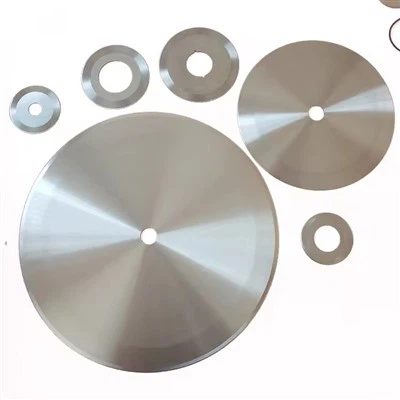
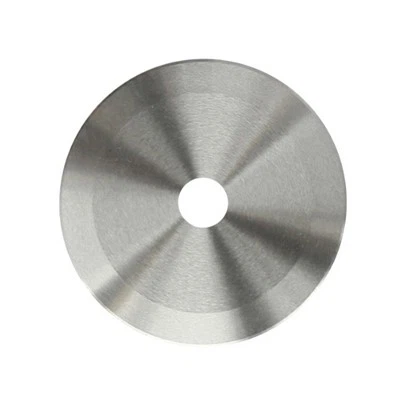
As a long - standing supplier of rubber cutting saw blades, I've been constantly engaged in discussions with industry professionals, and one question that often comes up is: "Are there any alternatives to a rubber cutting saw blade?" In this blog, we'll explore this query in detail, considering various aspects from performance to cost - effectiveness.
Understanding the Role of Rubber Cutting Saw Blades
Before delving into alternatives, it's crucial to understand what makes rubber cutting saw blades so popular in the industry. Rubber is a challenging material to cut due to its elasticity and toughness. Rubber cutting saw blades are designed with specific tooth geometries and materials to grip the rubber firmly and make clean, precise cuts. They are commonly used in industries such as automotive, tire manufacturing, and rubber product fabrication.
The teeth of a rubber cutting saw blade are engineered to penetrate the rubber without causing excessive tearing or deformation. High - quality blades are made from materials like high - speed steel or carbide, which can withstand the abrasion caused by the rubber during the cutting process. This durability ensures a long service life, reducing the frequency of blade replacements and associated costs.
Potential Alternatives to Rubber Cutting Saw Blades
Water Jet Cutting
One of the most well - known alternatives to rubber cutting saw blades is water jet cutting. Water jet cutting uses a high - pressure stream of water, often mixed with an abrasive substance, to cut through various materials, including rubber. This method offers several advantages. Firstly, it provides extremely precise cuts, with tolerances as low as ±0.005 inches. This high level of precision makes it suitable for applications where accuracy is critical, such as in the production of rubber gaskets or seals.
Secondly, water jet cutting is a non - contact cutting method. This means that there is no mechanical stress applied to the rubber, which can prevent issues like material deformation or heat - induced damage. The absence of heat also eliminates the risk of vulcanization or other chemical changes in the rubber, ensuring that the material properties remain intact.
However, water jet cutting also has its drawbacks. The equipment for water jet cutting is relatively expensive to purchase and maintain. The operating costs, including the cost of water, abrasive materials, and energy consumption, can also be high. Additionally, the cutting speed is generally slower compared to using a rubber cutting saw blade, which may not be suitable for high - volume production environments.
Laser Cutting
Laser cutting is another alternative for cutting rubber. Laser cutting works by focusing a high - energy laser beam onto the rubber, which melts, burns, or vaporizes the material to create a cut. This method offers high - speed cutting and can produce intricate shapes with high precision. It is particularly useful for cutting thin rubber sheets or creating detailed patterns.
Laser cutting systems can be automated easily, which is beneficial for large - scale production. They also have a relatively small kerf width, which means less material is wasted during the cutting process. However, laser cutting has some limitations when it comes to rubber. The heat generated by the laser can cause the rubber to char or produce toxic fumes, especially when cutting certain types of rubber. Additionally, the initial investment in a laser cutting machine is significant, and the maintenance requirements can be complex.
Die Cutting
Die cutting is a traditional method that involves using a custom - made die to cut rubber into specific shapes. The die is pressed onto the rubber sheet, and the cutting action is achieved through mechanical force. Die cutting is highly efficient for mass - producing simple shapes. It is relatively inexpensive for high - volume production once the die has been created.

However, die cutting has limitations in terms of flexibility. Changing the shape of the cut requires creating a new die, which can be time - consuming and costly. It also may not be suitable for cutting thick rubber materials, as the force required to cut through thick rubber can damage the die.

Comparing Alternatives with Rubber Cutting Saw Blades
Performance
In terms of performance, rubber cutting saw blades offer a good balance between speed and precision. They can cut through a wide range of rubber thicknesses and densities. While water jet cutting and laser cutting can provide higher precision in some cases, they may not be as fast as using a saw blade for large - scale, straightforward cutting tasks. Die cutting, on the other hand, is limited to pre - determined shapes and may not offer the same level of precision as other methods for complex designs.
Cost - effectiveness
When it comes to cost - effectiveness, rubber cutting saw blades are often a more economical choice for many applications. The initial investment in a saw blade is relatively low compared to the cost of water jet or laser cutting equipment. The operating costs, including blade replacements, are also generally lower. Die cutting can be cost - effective for high - volume production of simple shapes, but the cost of creating new dies can offset the savings if design changes are frequent.
Application - Specific Considerations
The choice between a rubber cutting saw blade and its alternatives also depends on the specific application. For example, if you are cutting thick rubber sheets for industrial use, a rubber cutting saw blade may be the most practical option. If you need to create highly detailed and precise rubber parts, water jet or laser cutting may be more suitable. Die cutting is ideal for mass - producing standardized rubber products.
Our Product Range and Advantages
As a supplier of rubber cutting saw blades, we offer a wide range of products to meet different customer needs. Our blades are made from high - quality materials, ensuring long - lasting performance and sharp cutting edges. We also provide custom - made solutions, allowing customers to get the perfect blade for their specific cutting requirements.

In addition to rubber cutting saw blades, we also supply related products such as Filling Machine Tooth Cutting Blade, Sealing Machine Blade, and T Type Packaging Machine Blade. These products are designed to work seamlessly with our rubber cutting saw blades in various industrial processes, providing a comprehensive solution for our customers.

Conclusion
While there are alternatives to rubber cutting saw blades, each option has its own set of advantages and disadvantages. The choice depends on factors such as performance requirements, cost - effectiveness, and specific application needs. As a trusted supplier, we are committed to helping our customers make the right decision. Whether you choose a rubber cutting saw blade or one of the alternative methods, we can provide you with the necessary products and support.
If you are interested in our rubber cutting saw blades or any of our other products, we encourage you to reach out to us for a detailed discussion. We look forward to working with you to meet your cutting needs.
References
- "Cutting Technologies for Rubber and Elastomers" - Industrial Manufacturing Handbook
- "Advances in Non - Traditional Cutting Methods" - Journal of Materials Processing Technology
- "Die Cutting: Principles and Applications" - Manufacturing Engineering Magazine