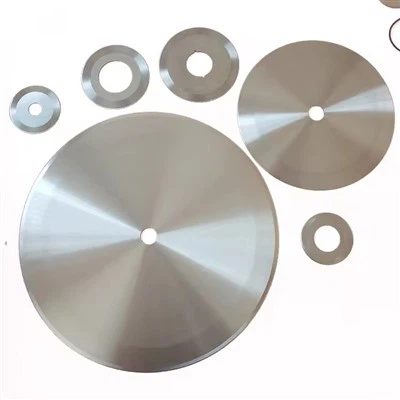
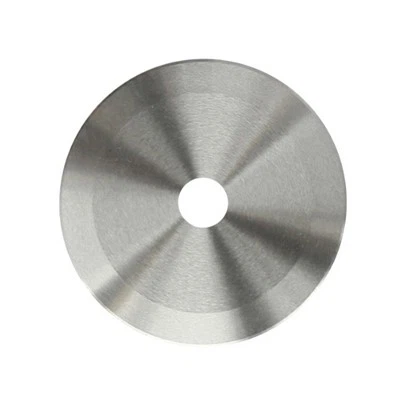
As a supplier of toothed cutters, I often encounter a common question from customers: Can a toothed cutter be sharpened? This question is not only relevant to the longevity of the cutters but also to the overall cost - effectiveness of using them. In this blog, I will delve into this topic, exploring the possibility of sharpening toothed cutters, the methods involved, and the factors to consider.
The Feasibility of Sharpening Toothed Cutters
To answer the question straightforwardly, yes, a toothed cutter can be sharpened. Toothed cutters are widely used in various industries, such as tire manufacturing, meat processing, and packaging. For example, the Tire Trimming Blade is essential in the tire industry to trim excess rubber, the Meat Slicer Blade is used in meat processing plants, and the Packaging Machine Blade plays a crucial role in the packaging industry. Over time, these cutters can become dull due to continuous use, wear and tear, and contact with hard materials.
Sharpening a toothed cutter can restore its cutting performance, allowing it to cut materials more efficiently. A sharp cutter also reduces the amount of force required to cut, which can save energy and prevent premature wear on the cutting equipment. However, the feasibility of sharpening depends on several factors, including the type of cutter, the material it is made of, and the extent of wear.
Types of Toothed Cutters and Their Sharpening Possibilities
High - Speed Steel (HSS) Toothed Cutters
High - speed steel is a popular material for toothed cutters because of its excellent hardness, wear resistance, and heat resistance. HSS toothed cutters can generally be sharpened multiple times. The high carbon and alloy content in HSS allows it to maintain its hardness even at high temperatures generated during the sharpening process. These cutters can be sharpened using traditional sharpening methods such as grinding wheels or sharpening stones. However, care must be taken not to overheat the cutter during sharpening, as excessive heat can cause the steel to lose its hardness and temper.


Carbide - Tipped Toothed Cutters
Carbide - tipped toothed cutters are another common type. The carbide tips provide superior cutting performance and durability compared to HSS cutters. Carbide is an extremely hard material, and sharpening carbide - tipped cutters is more challenging. Specialized sharpening equipment and tools are required, such as diamond - grit grinding wheels. Diamond is one of the few materials hard enough to grind carbide. Additionally, the precision of sharpening carbide - tipped cutters is crucial, as any deviation in the cutting edge angle can significantly affect the cutter's performance.
Ceramic Toothed Cutters
Ceramic toothed cutters are relatively new in the market. They offer high hardness and excellent chemical stability. However, they are also very brittle. Sharpening ceramic toothed cutters is extremely difficult and may not be cost - effective in most cases. Minor cracks or chips in the ceramic can occur during sharpening, which can compromise the cutter's integrity and performance.
Sharpening Methods
Manual Sharpening
Manual sharpening is a traditional method that involves using sharpening stones or files. This method is suitable for small - scale operations or for sharpening simple toothed cutters. For example, a small meat slicer blade can be sharpened manually by a skilled operator. The operator needs to hold the cutter at the correct angle against the sharpening stone and move it back and forth in a controlled manner. Manual sharpening requires a high level of skill and patience, as it is easy to create an uneven cutting edge if not done correctly.
Machine Sharpening
Machine sharpening is more commonly used in industrial settings. There are various types of sharpening machines available, such as surface grinders, tool and cutter grinders. These machines can provide more precise and consistent results compared to manual sharpening. They are also capable of handling large - scale production and complex toothed cutter geometries. For example, in a tire manufacturing plant, the tire trimming blades can be sharpened using a specialized machine that can accurately reshape the teeth of the cutter.
Factors to Consider Before Sharpening
Extent of Wear
Before deciding to sharpen a toothed cutter, it is important to assess the extent of wear. If the cutter has significant damage, such as large chips, cracks, or excessive wear on the teeth, sharpening may not be sufficient to restore its performance. In some cases, it may be more cost - effective to replace the cutter rather than attempting to sharpen it.
Cost - Benefit Analysis
Sharpening a toothed cutter incurs costs, including the cost of sharpening equipment, labor, and consumables such as grinding wheels. A cost - benefit analysis should be conducted to determine whether sharpening is a viable option. If the cost of sharpening is close to or higher than the cost of a new cutter, and the cutter has already been used for a long time, it may be better to purchase a new one.
Cutting Requirements
The cutting requirements of the application also play a role. If the application requires extremely high precision and a sharp cutting edge, such as in the medical or aerospace industries, sharpening may need to meet very strict standards. In some cases, a freshly sharpened cutter may not meet the exacting requirements, and a new cutter may be the better choice.
Conclusion
In conclusion, a toothed cutter can generally be sharpened, but the process is not without challenges. The type of cutter, the material it is made of, the extent of wear, and the cutting requirements all need to be considered. As a toothed cutter supplier, I understand the importance of providing customers with not only high - quality cutters but also advice on their maintenance and sharpening.
If you are in need of toothed cutters or have questions about sharpening your existing cutters, I encourage you to reach out for a detailed discussion. Whether you are in the tire, meat processing, or packaging industry, we can provide you with the right solutions for your cutting needs. Contact us to start a procurement negotiation and find the best toothed cutter solutions for your business.
References
- "Cutting Tool Engineering Handbook", various authors, Industrial Press Inc.
- "Materials Science and Engineering: An Introduction", William D. Callister, Jr. and David G. Rethwisch, Wiley.
- Industry - specific research papers on toothed cutter manufacturing and sharpening.