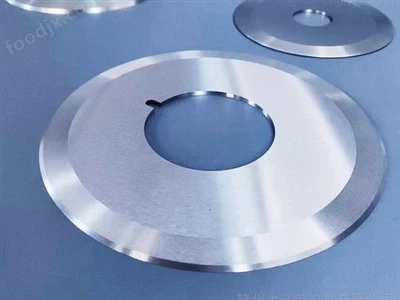
As a professional manufacturer of circular slitter blades, we witness how critical stable cutting precision is for slitting production lines every day. Whether you process paper, rubber, composite film or other flexible materials, consistent accuracy directly decides finished product quality. In this article, we share seven practical tips to maintain reliable cutting performance of circular slitter blades.
1. Blade Selection
The first step in ensuring cutting accuracy is choosing the right blade for the job. Different materials require different blade designs and specifications. For example, if you're cutting paper, a Rotary Circular Round Paper Cutting Slitter Blade with a sharp edge and appropriate tooth geometry will be ideal. These blades are specifically engineered to cut through paper smoothly and precisely. You can check out Round Paper Cutting Blade options for more details on paper - cutting blades.
On the other hand, when it comes to cutting rubber, a Rubber Cutting Blade is necessary. Rubber has unique properties such as elasticity, and a blade designed for this material will have features that can handle the stretch and rebound of rubber without causing excessive tearing or deformation.
Our Industrial Keyway Circular Slitter Blades are a great choice for industrial applications where high - precision cutting is required. They are made from high - quality materials and are designed to provide long - lasting performance.

2. Follow Standard Blade Installation
Even a high-quality blade will cause uneven slitting, abnormal vibration and premature wear if installed incorrectly. Before mounting, fully clean the blade surface, shaft and clamping fixtures to remove accumulated dust and debris. Check all mounting bolts and lock parts to confirm no deformation or size mismatch. Align the circular slitter blade strictly according to the designated orientation marked on the cutter body. If you are unfamiliar with the assembly workflow, follow the official equipment operation manual. Minor installation errors will continuously damage cutting accuracy during mass production.
3. Carry Out Regular Machine Calibration
The slitter machine itself plays an indispensable role in maintaining slitting precision. Schedule periodic equipment calibration. Adjust running speed, feed rate and cutting pressure based on material thickness and blade type. For thick, tough raw materials: appropriately lower slitting speed and increase contact pressure to obtain complete clean cuts. For thin, delicate films or paper: adopt higher line speed with reduced pressure to prevent material crushing. Inspect machine guides and bearings routinely. Worn guides and loose bearings will make the blade deviate from the preset track and produce off-spec slitting widths.
4. Establish Standard Blade Maintenance Rules
Continuous daily maintenance keeps the blade's original cutting precision for longer service cycles. Wipe off material residue and sticky debris after every shift. Choose neutral cleaning agents that will not corrode alloy blade surfaces. Perform regular visual inspection to check for edge chipping, cracks and dull zones. Replace the blade immediately once obvious wear appears. Worn cutters not only ruin slitting quality, but also risk scratching materials and damaging slitter equipment. Sharpen blades according to the correct technical procedure. Improper grinding will alter edge geometry and permanently reduce cutting precision. If your team lacks professional grinding experience, send blades to professional regrinding service providers.
5. Deliver Systematic Operator Training
Perfect blades and well-calibrated machines cannot guarantee accuracy without skilled operators. Train frontline staff on blade model selection, standardized installation, reasonable parameter setup and basic daily cleaning & inspection procedures. Operators also need to learn to identify defective slitting effects in real time. When jagged edges or inconsistent width appear, they should check blade status and machine settings promptly or communicate with technical supervisors.
6. Optimize Raw Material Pre-Processing
Material properties including hardness, elasticity and thickness fluctuation will affect final slitting results. Complete material preparation before production: flatten curled stock, eliminate wrinkles and fix the material firmly on the feeding roller. Shifting and wandering materials during operation are one common cause of inaccurate slitting width.
7. On-Site Continuous Quality Control
Set up regular quality sampling during production. Measure slit width, thickness and edge quality periodically to verify compliance with specifications. Visually check finished strips for jagged edges, incomplete cuts and film tearing. Early detection of abnormalities avoids mass defective output.
Source Reliable Circular Slitter Blades With Stable Precision
If you are sourcing durable circular slitter blades for your slitting production lines, we are your trusted supplier. We fully understand how consistent slitting accuracy impacts your finished goods, and all our circular cutters are precision ground to maintain stable cutting performance.
We provide customized circular slitter blades dedicated to paper slitting, rubber processing and other industrial slitting scenarios. Feel free to contact our team to share your material and machine parameters for targeted recommendations and formal quotations.
Besides circular slitter blades, we also produce easy-tear V-notch cutters, VFFS sealing jaws and other packaging processing consumables. Browse our complete cutting tool catalog here: Packaging Blades
References
- Blade Technology Handbook, XYZ Publications
- Industrial Cutting Equipment Manual, ABC Publishers
- Material Science for Cutting Applications, DEF Press