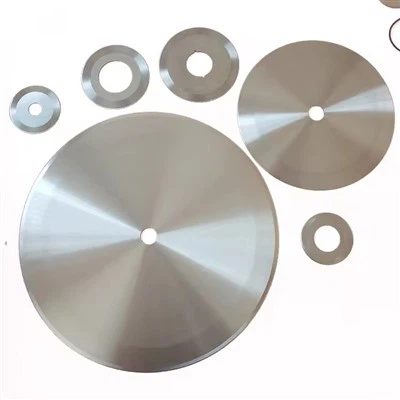
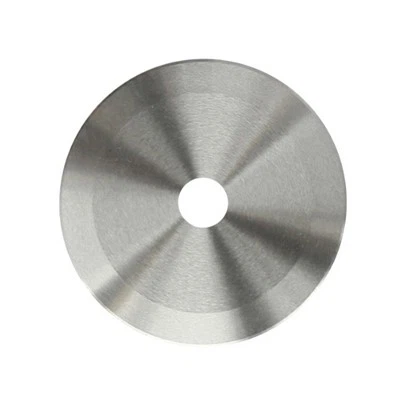
When it comes to the world of industrial cutting, circular slitter blades play a pivotal role. As a dedicated supplier of Circular Slitter Blades, I've had the privilege of witnessing the diverse applications and technological advancements in this field. One question that often arises from our clients is: "What is the maximum cutting speed of circular slitter blades?" In this blog post, I'll delve into this topic, exploring the factors that influence the maximum cutting speed and how we, as a supplier, ensure optimal performance.


Understanding Circular Slitter Blades
Circular slitter blades are used in a wide range of industries, from paper and packaging to rubber and plastics. These blades are designed to make precise cuts in various materials, and their performance is crucial for the efficiency and quality of the cutting process. The circular shape of the blade allows for continuous rotation, enabling high - speed cutting operations.
In the paper industry, for example, Round Paper Cutting Blade are used to cut large rolls of paper into smaller, more manageable sizes. In the rubber industry, Rubber Cutting Blade are employed to cut rubber sheets or strips with high precision.
Factors Affecting the Maximum Cutting Speed
Material of the Blade
The material of the circular slitter blade is one of the most significant factors influencing its maximum cutting speed. High - quality materials such as carbide, high - speed steel (HSS), and ceramic can withstand higher cutting speeds. Carbide blades, for instance, are extremely hard and wear - resistant. They can maintain their sharpness even at high cutting speeds, making them suitable for cutting hard and abrasive materials.
High - speed steel blades are also popular due to their good balance of hardness and toughness. They can be heat - treated to achieve the desired properties, allowing for relatively high cutting speeds. Ceramic blades, on the other hand, have excellent hardness and chemical stability. However, they are more brittle than carbide and HSS, which may limit their use in some high - speed applications.
Material to be Cut
The nature of the material being cut has a direct impact on the maximum cutting speed. Soft materials like paper and some plastics can be cut at relatively high speeds. For example, a circular slitter blade can cut paper at speeds of up to several hundred meters per minute. In contrast, hard and abrasive materials such as metals or reinforced plastics require lower cutting speeds to avoid excessive blade wear and damage.
The thickness of the material also matters. Thicker materials generally require slower cutting speeds to ensure a clean and precise cut. When cutting thick rubber sheets, for example, the blade needs more time to penetrate the material, and a lower cutting speed is necessary to prevent the blade from overheating or getting damaged.
Blade Design
The design of the circular slitter blade, including its diameter, tooth profile, and rake angle, can affect the cutting speed. A larger diameter blade can cover more distance in one rotation, potentially allowing for higher cutting speeds. However, larger blades also require more power to rotate, and there may be limitations based on the cutting machine's capabilities.
The tooth profile of the blade is crucial for efficient cutting. A well - designed tooth profile can reduce the cutting force required and improve chip evacuation. This, in turn, can enable higher cutting speeds. The rake angle of the blade also plays a role. A positive rake angle can reduce the cutting force, but it may also decrease the blade's strength. A negative rake angle, on the other hand, provides more strength but may increase the cutting force.
Cutting Machine
The capabilities of the cutting machine are a limiting factor for the maximum cutting speed. The power of the motor, the stability of the machine, and the quality of the bearings all affect how fast the blade can rotate. A high - power motor can drive the blade at higher speeds, but if the machine is not stable, it can cause vibrations that lead to poor cutting quality and premature blade wear.
The control system of the cutting machine is also important. A precise control system can adjust the cutting speed based on the material being cut and other parameters, ensuring optimal performance.
Determining the Maximum Cutting Speed
To determine the maximum cutting speed of a circular slitter blade, a combination of theoretical calculations and practical testing is usually required. Theoretical calculations take into account factors such as the material properties of the blade and the material to be cut, as well as the blade design. However, these calculations are often based on ideal conditions and may not fully reflect the real - world situation.
Practical testing involves running the blade at different speeds on the actual cutting machine with the specific material. By monitoring the cutting quality, blade wear, and other parameters, the optimal cutting speed can be determined. This process may take some time and resources, but it is essential for ensuring the best performance of the blade.
Our Approach as a Supplier
As a supplier of circular slitter blades, we are committed to providing our clients with blades that offer the best possible performance. We work closely with our clients to understand their specific cutting requirements, including the material to be cut, the desired cutting speed, and the quality of the cut.
We use advanced manufacturing techniques to produce blades from high - quality materials. Our blades are carefully designed and tested to ensure they can meet the demands of various applications. We also provide technical support to our clients, helping them determine the optimal cutting speed and other parameters for their specific cutting operations.
Conclusion
In conclusion, the maximum cutting speed of circular slitter blades is influenced by multiple factors, including the blade material, the material to be cut, the blade design, and the cutting machine. Determining the optimal cutting speed requires a combination of theoretical knowledge and practical testing.
As a supplier, we strive to provide our clients with the best circular slitter blades and support. If you are looking for high - quality circular slitter blades or need advice on cutting speed and other related issues, we encourage you to contact us for a procurement discussion. We are ready to work with you to find the best solutions for your cutting needs.
References
- Kalpakjian, S., & Schmid, S. R. (2009). Manufacturing Engineering and Technology. Pearson Prentice Hall.
- Trent, E. M., & Wright, P. K. (2000). Metal Cutting. Butterworth - Heinemann.