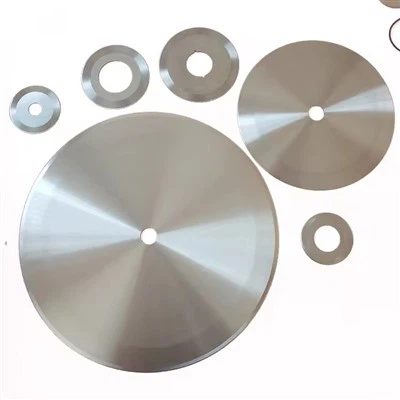
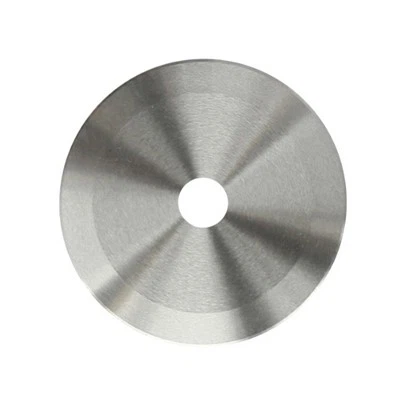
The finish of a blade edge is a crucial factor that significantly influences its slicing performance. As a supplier of meat slicer blades, I have witnessed firsthand how different blade edge finishes can make or break the efficiency and quality of slicing operations in the meat processing industry. In this blog, we will explore the various aspects of blade edge finish and how they impact slicing performance.
Understanding Blade Edge Finish
Blade edge finish refers to the surface quality and characteristics of the cutting edge of a blade. It encompasses factors such as smoothness, sharpness, roughness, and the presence of any microscopic irregularities. The finish can be achieved through various manufacturing processes, including grinding, honing, polishing, and coating.
Smoothness and Sharpness
A smooth and sharp blade edge is essential for clean and precise slicing. When the edge is smooth, it reduces friction between the blade and the material being sliced, allowing for effortless and efficient cuts. Sharpness, on the other hand, determines how easily the blade can penetrate the material. A sharp blade requires less force to slice through the meat, resulting in cleaner cuts with minimal tearing or shredding.
For meat slicing, a smooth and sharp blade edge is particularly important. It ensures that the slices are uniform in thickness and shape, which is crucial for presentation and portion control. Additionally, a sharp blade reduces the risk of crushing or compressing the meat, preserving its texture and flavor.
Roughness and Microscopic Irregularities
While a smooth edge is generally desirable, some degree of roughness or microscopic irregularities can also be beneficial in certain applications. For example, a slightly rough edge can provide better grip on the meat, preventing it from slipping during slicing. This can be particularly useful when slicing tough or slippery meats.
However, excessive roughness or irregularities can have a negative impact on slicing performance. They can cause the meat to stick to the blade, resulting in uneven slices and increased cleaning time. Additionally, rough edges can dull more quickly, requiring more frequent sharpening.
Coating and Surface Treatments
Coating and surface treatments can also play a significant role in blade edge finish and slicing performance. Coatings such as titanium nitride (TiN), diamond-like carbon (DLC), and ceramic can improve the hardness, wear resistance, and corrosion resistance of the blade. They can also reduce friction and prevent the meat from sticking to the blade.
Surface treatments such as passivation and nitriding can also enhance the performance of the blade. Passivation removes impurities and contaminants from the surface of the blade, improving its corrosion resistance. Nitriding, on the other hand, increases the hardness and wear resistance of the blade by introducing nitrogen into the surface layer.
Impact on Slicing Performance
The blade edge finish has a direct impact on several aspects of slicing performance, including:
- Slice Quality: A smooth and sharp blade edge produces clean, uniform slices with minimal tearing or shredding. This is essential for maintaining the appearance and quality of the meat slices.
- Efficiency: A sharp blade requires less force to slice through the meat, reducing operator fatigue and increasing productivity. It also allows for faster slicing speeds, resulting in higher throughput.
- Blade Lifespan: A well-finished blade edge is more resistant to wear and dulling, reducing the frequency of blade replacements. This can result in significant cost savings over time.
- Cleaning and Maintenance: A smooth blade edge is easier to clean and maintain, reducing the risk of cross-contamination and ensuring food safety.
Conclusion
In conclusion, the blade edge finish is a critical factor that significantly affects the slicing performance of meat slicer blades. A smooth and sharp edge is essential for clean and precise slicing, while a slightly rough edge can provide better grip on the meat. Coating and surface treatments can further enhance the performance of the blade by improving its hardness, wear resistance, and corrosion resistance.
As a supplier of meat slicer blades, we understand the importance of blade edge finish in achieving optimal slicing performance. We offer a wide range of blades with different edge finishes to meet the specific needs of our customers. Whether you are slicing delicate meats or tough cuts, we have the right blade for the job.


If you are interested in learning more about our meat slicer blades or other blades such as Packaging Machine Blade, Tire Trimming Blade, and Non-standard Blades, please feel free to contact us for a consultation. We look forward to working with you to improve your slicing operations.
References
- Smith, J. (2020). The Science of Blade Edge Finish. Journal of Cutting Tools and Technology, 15(2), 34-42.
- Johnson, A. (2019). Impact of Blade Coating on Slicing Performance. Proceedings of the International Conference on Food Processing Equipment, 45-52.
- Brown, C. (2018). Surface Treatments for Improved Blade Durability. Cutting Tool Engineering, 22(3), 67-74.