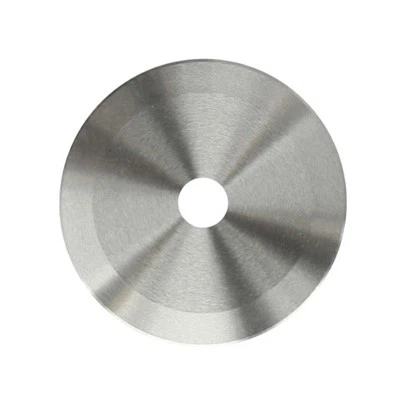
As a supplier of meat slicer blades, I've spent years delving into the intricacies of blade technology and its impact on the meat processing industry. One aspect that often goes unnoticed but plays a crucial role in the efficiency and quality of meat slicing is the blade surface finish. In this blog post, I'll explore how the blade surface finish affects the adhesion of meat and why it matters for your meat slicing operations.
Understanding Blade Surface Finish
The surface finish of a blade refers to the texture and smoothness of its cutting edge. It is typically measured in terms of roughness average (Ra), which is the arithmetic average of the absolute values of the surface irregularities over a specified sampling length. A lower Ra value indicates a smoother surface finish, while a higher Ra value indicates a rougher surface.
There are several factors that can influence the surface finish of a blade, including the manufacturing process, the type of material used, and the post - processing treatments. For example, blades that are ground and polished to a high degree will have a smoother surface finish compared to those that are simply machined.
The Relationship between Blade Surface Finish and Meat Adhesion
Meat adhesion to the blade is a common problem in meat slicing operations. It can lead to several issues, such as uneven slices, increased blade wear, and reduced productivity. The surface finish of the blade plays a significant role in determining the degree of meat adhesion.
Smoother Surfaces Reduce Adhesion
A smoother blade surface finish tends to reduce meat adhesion. When the blade has a low Ra value, there are fewer microscopic peaks and valleys on the surface. This means that there are fewer areas for the meat fibers to catch onto, reducing the likelihood of the meat sticking to the blade.
For instance, a blade with a mirror - like finish has a very low surface roughness. As the blade slices through the meat, the smooth surface allows the meat to glide off the blade more easily, minimizing adhesion. This results in cleaner, more consistent slices and reduces the need for frequent blade cleaning.
Rougher Surfaces Increase Adhesion
Conversely, a rougher blade surface finish can increase meat adhesion. The microscopic peaks and valleys on a rough surface act as hooks, catching the meat fibers and causing the meat to stick to the blade. This can be especially problematic when slicing softer meats or meats with a high fat content.
When meat adheres to the blade, it can build up over time, creating a layer of debris that can affect the cutting performance. The blade may become duller more quickly, and the slices may become uneven as the built - up meat interferes with the cutting action.
Implications for Meat Processing Operations
The impact of blade surface finish on meat adhesion has several implications for meat processing operations.
Quality of Slices
The quality of the slices is directly affected by meat adhesion. When the meat adheres to the blade, it can cause the slices to tear or become uneven. A smoother blade surface finish helps to ensure that the slices are clean, uniform, and have a professional appearance. This is particularly important for high - end meat products, where the visual appeal of the slices can significantly influence consumer perception.


Blade Lifespan
Meat adhesion can also have a negative impact on the lifespan of the blade. When meat builds up on the blade, it can create additional friction during the cutting process. This increased friction can cause the blade to wear out more quickly, requiring more frequent blade replacements. By reducing meat adhesion through a smoother surface finish, the blade can maintain its sharpness for a longer period, reducing the overall cost of blade replacement.
Productivity
In a meat processing facility, productivity is key. When meat adheres to the blade, it can slow down the slicing process. Operators may need to stop the machine frequently to clean the blade, which can lead to downtime and reduced output. A blade with a smooth surface finish that minimizes meat adhesion allows for continuous, efficient slicing, increasing the overall productivity of the operation.
Choosing the Right Blade Surface Finish
As a meat slicer blade supplier, I understand that choosing the right blade surface finish is crucial for our customers. Here are some factors to consider when selecting a blade with the appropriate surface finish:
Type of Meat
The type of meat being sliced is an important consideration. Softer meats, such as poultry or fish, are more likely to adhere to the blade compared to harder meats like beef or pork. For softer meats, a blade with a very smooth surface finish is recommended to minimize adhesion. On the other hand, when slicing harder meats, a slightly rougher surface finish may be acceptable, as long as it does not cause excessive meat adhesion.
Slicing Requirements
The slicing requirements, such as slice thickness and speed, also play a role in determining the ideal blade surface finish. For thin slices, a smoother blade surface is often preferred, as it can help to prevent the slices from tearing. When slicing at high speeds, a blade with a low adhesion surface finish is essential to maintain consistent performance.
Our Product Range
At our company, we offer a wide range of meat slicer blades with different surface finishes to meet the diverse needs of our customers. In addition to meat slicer blades, we also provide other high - quality blades for various applications, such as the Automatic Packaging Blade, Toothed Blade, and Cutting Blade For Film Laminating.
Our blades are manufactured using advanced technology and high - quality materials to ensure optimal performance and durability. We can customize the surface finish of our blades according to your specific requirements, helping you to achieve the best results in your meat slicing operations.
Contact Us for Procurement
If you're looking for high - quality meat slicer blades or other blades for your processing needs, we'd love to hear from you. Our team of experts can provide you with detailed information about our products, help you choose the right blade surface finish for your application, and assist you with any technical questions you may have.
Whether you're a small - scale meat processor or a large - scale industrial operation, we have the products and expertise to meet your needs. Contact us today to start a conversation about your blade requirements and take your meat slicing operations to the next level.
References
- Smith, J. (2018). "Surface Finish and Its Impact on Cutting Performance." Journal of Manufacturing Technology, 25(3), 123 - 135.
- Johnson, A. (2019). "Meat Processing: The Role of Blade Technology." Food Processing Magazine, 45(6), 78 - 85.
- Brown, C. (2020). "Optimizing Blade Surface Finish for Improved Meat Slicing." Proceedings of the International Meat Processing Conference, 12 - 18.