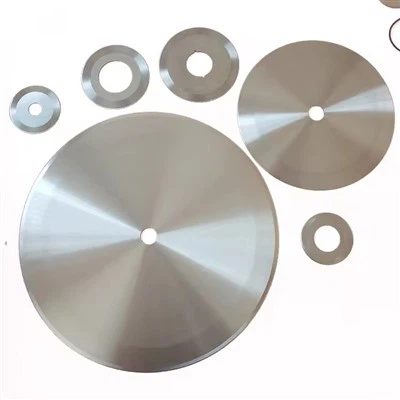
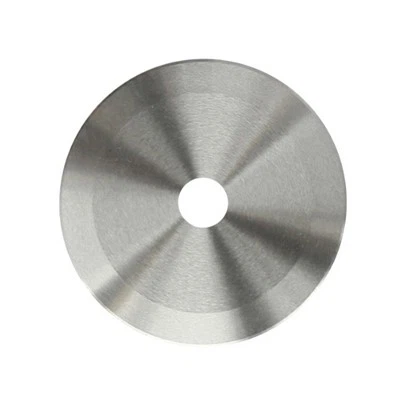
The tooth pitch of a toothed cutter is a critical parameter that significantly influences the cutting process. As a toothed cutter supplier, I have witnessed firsthand how different tooth pitches can lead to varying cutting results across a wide range of applications. In this blog, I will delve into the science behind tooth pitch and its impact on cutting, providing insights that can help you make informed decisions when selecting the right toothed cutter for your needs.
Understanding Tooth Pitch
Tooth pitch refers to the distance between the corresponding points of adjacent teeth on a toothed cutter. It is typically measured in millimeters or inches. A smaller tooth pitch means that there are more teeth per unit length, while a larger tooth pitch indicates fewer teeth. The tooth pitch is determined by the design requirements of the cutting task, such as the material being cut, the cutting speed, and the desired finish.


Effects of Tooth Pitch on Cutting Performance
Cutting Force
The tooth pitch has a direct impact on the cutting force required to perform the cutting operation. A smaller tooth pitch generally results in a lower cutting force. This is because each tooth removes a smaller amount of material with each pass, reducing the load on the cutter. As a result, the cutter can operate more smoothly and with less vibration, which is beneficial for both the cutter's lifespan and the quality of the cut.
For example, when cutting soft materials like plastics or rubber, a toothed cutter with a small tooth pitch can easily slice through the material with minimal force. On the other hand, when cutting harder materials such as metals, a larger tooth pitch may be required to handle the higher cutting forces involved.
Cutting Speed
The tooth pitch also affects the cutting speed. A cutter with a smaller tooth pitch can typically operate at a higher cutting speed. This is because the smaller teeth can engage with the material more frequently, allowing for a faster removal rate. However, it is important to note that the cutting speed is also limited by other factors such as the material's hardness and the cutter's power.
In applications where high productivity is required, such as mass production in the packaging industry, a toothed cutter with a small tooth pitch can be a great choice. For instance, the Cutting Blade For Film Laminating often uses a small tooth pitch to achieve fast and precise cutting of film materials.
Surface Finish
The tooth pitch plays a crucial role in determining the surface finish of the cut. A smaller tooth pitch generally results in a smoother surface finish. This is because the smaller teeth leave behind smaller chips and less visible cutting marks. In applications where a high-quality surface finish is required, such as in the production of precision parts or decorative items, a toothed cutter with a small tooth pitch is preferred.
Conversely, a larger tooth pitch may leave behind a rougher surface finish. However, in some cases, a rougher finish may be acceptable or even desirable, such as in applications where the cut surface will be further processed or where a textured appearance is desired.
Chip Formation
The tooth pitch also affects the chip formation during the cutting process. A smaller tooth pitch tends to produce smaller chips, which are easier to evacuate from the cutting area. This helps to prevent chip clogging, which can lead to poor cutting performance and damage to the cutter.
In contrast, a larger tooth pitch may produce larger chips. While these chips can be more easily removed in some cases, they may also require a more robust chip evacuation system to ensure smooth cutting operation.
Selecting the Right Tooth Pitch
When selecting a toothed cutter, it is essential to consider the specific requirements of the cutting task. Here are some factors to keep in mind:
Material Type
The type of material being cut is one of the most important factors in determining the appropriate tooth pitch. Soft materials generally require a smaller tooth pitch, while harder materials may need a larger tooth pitch. For example, when cutting paper or cardboard, a toothed cutter with a small tooth pitch, such as the Dotted Paper Cutting Blade, can provide clean and precise cuts. When cutting metals, a larger tooth pitch may be necessary to handle the higher cutting forces.
Cutting Application
The nature of the cutting application also influences the choice of tooth pitch. For high-speed cutting applications, a smaller tooth pitch is often preferred to achieve faster cutting speeds. In applications where a smooth surface finish is critical, such as in the production of optical components or medical devices, a toothed cutter with a small tooth pitch is essential.
Machine Compatibility
It is important to ensure that the selected toothed cutter is compatible with the cutting machine. The machine's power, speed, and feed rate capabilities must be taken into account when choosing the tooth pitch. Using a cutter with an inappropriate tooth pitch can lead to poor cutting performance, excessive wear on the cutter, and even damage to the machine.
Our Toothed Cutter Offerings
As a toothed cutter supplier, we offer a wide range of toothed cutters with different tooth pitches to meet the diverse needs of our customers. Our Cutting Blade For Film Laminating is designed with a small tooth pitch to provide fast and precise cutting of film materials. The Dotted Paper Cutting Blade is ideal for cutting paper and cardboard, offering clean and accurate cuts. Our T Type Packaging Machine Blade is available in various tooth pitches to suit different packaging applications.
Conclusion
In conclusion, the tooth pitch of a toothed cutter has a profound impact on the cutting process. It affects the cutting force, cutting speed, surface finish, and chip formation. By understanding the relationship between tooth pitch and cutting performance, you can make an informed decision when selecting the right toothed cutter for your specific needs.
If you are in the market for high-quality toothed cutters, we invite you to contact us for a consultation. Our team of experts can help you choose the most suitable cutter for your application and provide you with the best possible solutions. Let's work together to achieve optimal cutting results.
References
- Smith, J. (2018). Cutting Tool Technology. Industrial Press Inc.
- Jones, A. (2019). Fundamentals of Machining and Machine Tools. CRC Press.