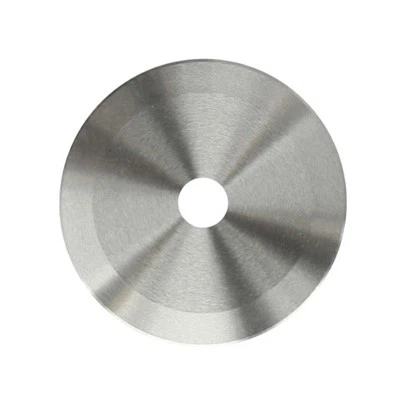
How to measure the wear of circular slitter blades?
As a supplier of circular slitter blades, I understand the crucial role these blades play in various industries, from paper processing to packaging. The efficiency and longevity of circular slitter blades are directly related to their wear condition. Therefore, accurately measuring the wear of circular slitter blades is essential to ensure optimal performance and cost - effectiveness. In this blog, I will share some effective methods for measuring the wear of circular slitter blades.
Visual Inspection
Visual inspection is the simplest and most basic method for assessing the wear of circular slitter blades. By closely examining the blade's cutting edge, you can detect signs of wear such as chipping, dulling, and unevenness.
When conducting a visual inspection, it is important to use proper lighting and magnification tools. A magnifying glass or a microscope can help you identify fine details on the blade's surface. For example, small chips on the cutting edge can lead to poor cutting quality and increased stress on the blade. If you notice any chips, it is a clear indication that the blade is starting to wear and may need to be replaced soon.
Dulling of the cutting edge is another common sign of wear. A sharp blade has a clean, well - defined edge, while a dull blade appears rounded or blunted. You can compare the blade in question with a new blade to get a better sense of the degree of dullness. Visual inspection can also reveal uneven wear patterns, which may be caused by improper installation, misalignment, or uneven loading during the cutting process.
Dimensional Measurement
Dimensional measurement is a more precise way to quantify the wear of circular slitter blades. This method involves measuring key dimensions of the blade, such as the diameter, thickness, and cutting edge radius.
The diameter of the blade can change over time due to wear. A decrease in diameter can affect the cutting performance and the alignment of the blade in the slitting machine. You can use a caliper or a micrometer to measure the diameter of the blade at multiple points to ensure accuracy. A significant reduction in diameter may indicate excessive wear and the need for replacement.
Thickness measurement is also important, especially for blades that are subject to high - pressure cutting operations. As the blade wears, its thickness may decrease, which can lead to reduced strength and stability. Measuring the thickness at different locations on the blade can help you identify areas of uneven wear.
The cutting edge radius is a critical dimension that directly affects the cutting quality. A sharp blade has a small cutting edge radius, while a worn blade has a larger radius. You can use a specialized tool, such as a radius gauge, to measure the cutting edge radius. An increase in the cutting edge radius can result in increased cutting forces, poor cut quality, and increased wear on the blade.
Surface Roughness Measurement
Surface roughness measurement is another important aspect of assessing the wear of circular slitter blades. The surface roughness of the blade can affect the friction between the blade and the material being cut, as well as the quality of the cut.
A worn blade typically has a rougher surface than a new blade. You can use a surface roughness tester to measure the surface roughness of the blade. The tester works by dragging a stylus across the surface of the blade and measuring the height variations. A higher surface roughness value indicates more wear on the blade.
Excessive surface roughness can cause problems such as increased cutting forces, material sticking to the blade, and poor cut quality. By monitoring the surface roughness of the blade, you can determine when it is time to replace the blade or perform maintenance to restore its surface finish.
Cutting Force Measurement
Cutting force measurement is an indirect way to measure the wear of circular slitter blades. As the blade wears, the cutting force required to cut through the material increases.
You can use a force sensor to measure the cutting force during the cutting process. By comparing the cutting force of a new blade with that of a used blade, you can get an indication of the degree of wear. An increase in cutting force can also be a sign of other problems, such as blade dullness, improper blade geometry, or material issues.
However, it is important to note that cutting force measurement can be affected by many factors, such as the type of material being cut, the cutting speed, and the feed rate. Therefore, it is necessary to control these factors when measuring the cutting force to ensure accurate results.
Microscopic Analysis
Microscopic analysis can provide detailed information about the wear mechanisms and the internal structure of the blade. By using a scanning electron microscope (SEM) or an optical microscope, you can examine the surface of the blade at a high magnification.


Microscopic analysis can reveal features such as wear particles, cracks, and changes in the microstructure of the blade material. For example, the presence of wear particles on the blade surface can indicate abrasive wear, while cracks may be a sign of fatigue or brittle fracture.
This method is particularly useful for understanding the root causes of wear and for developing strategies to improve the blade's performance and durability. However, microscopic analysis requires specialized equipment and expertise, and it is usually more time - consuming and expensive than other methods.
Importance of Regular Wear Measurement
Regular wear measurement of circular slitter blades is essential for several reasons. First, it helps to ensure the quality of the cutting process. A worn blade can produce poor - quality cuts, such as rough edges, burrs, or uneven cuts, which can affect the final product quality.
Second, regular wear measurement can help to prevent unexpected blade failure. By detecting wear early, you can schedule blade replacement or maintenance in a timely manner, reducing the risk of machine downtime and costly repairs.
Third, it can improve the cost - effectiveness of the cutting operation. By optimizing the blade replacement schedule based on the actual wear condition, you can reduce the cost of blade consumption and increase the overall productivity of the slitting machine.
As a supplier of Circular Slitter Blades, Round Paper Cutting Blade, and Round Packaging Machinery Blade, we are committed to providing high - quality blades and technical support to our customers. If you have any questions about measuring the wear of circular slitter blades or need advice on blade selection and maintenance, please feel free to contact us. We look forward to discussing your specific needs and helping you optimize your cutting operations.
References
- Kalpakjian, S., & Schmid, S. R. (2008). Manufacturing Engineering and Technology. Pearson Prentice Hall.
- Trent, E. M., & Wright, P. K. (2000). Metal Cutting. Butterworth - Heinemann.
- Shaw, M. C. (2005). Metal Cutting Principles. Oxford University Press.