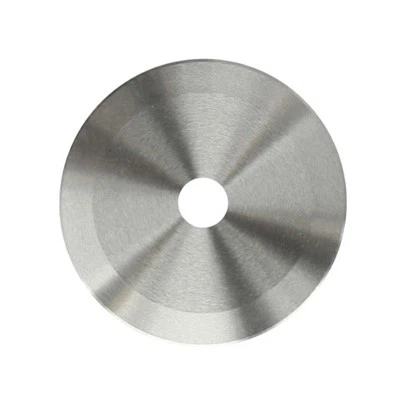
In the realm of industrial cutting tools, non - standard blades play a pivotal role. They are designed to meet specific and often unique requirements that standard blades cannot fulfill. One of the most crucial factors that determine the performance of non - standard blades is the blade angle. In this blog, as a supplier of non - standard blades, I will delve into what the blade angle of non - standard blades is and why it matters.
Understanding Blade Angle
The blade angle, also known as the cutting edge angle, refers to the angle formed between the two surfaces of the blade's cutting edge. It is a fundamental characteristic that significantly influences the cutting process. A blade with a well - defined angle can cut through materials more efficiently, with less force, and produce cleaner cuts.
There are several types of blade angles commonly used in non - standard blades, each with its own advantages and applications. For example, a small blade angle typically results in a sharper cutting edge. This is ideal for cutting soft materials such as paper, plastic films, and thin fabrics. Blades with a small angle can easily penetrate these materials, making the cutting process smooth and precise. On the other hand, a larger blade angle provides more strength and durability to the cutting edge. These blades are suitable for cutting harder materials like metals, thick plastics, and wood.
Factors Affecting Blade Angle Selection
When designing non - standard blades, several factors need to be considered to determine the appropriate blade angle.
Material to be Cut
The nature of the material is the primary factor. As mentioned earlier, soft materials require a smaller blade angle for efficient cutting. For instance, if you are dealing with a Packaging Machine Blade used in a packaging line to cut thin plastic films, a blade angle between 15 - 25 degrees might be optimal. This allows the blade to slice through the film without causing excessive tearing or deformation.
Conversely, when cutting hard materials, a larger blade angle is necessary. For example, a T Type Packaging Machine Blade used to cut thick cardboard in a packaging machine may require a blade angle of 35 - 45 degrees. The larger angle provides the necessary strength to withstand the forces exerted during the cutting process and prevents the blade from chipping or breaking.
Cutting Method
The cutting method also plays a role in blade angle selection. There are two main cutting methods: shearing and slicing. In shearing, two blades come together to cut the material. In this case, the blade angle is often designed to ensure a clean and efficient shearing action. A smaller blade angle can be used to reduce the cutting force required.
Slicing, on the other hand, involves a single blade moving through the material. For slicing operations, the blade angle needs to be optimized to minimize friction and heat generation. A blade with a suitable angle can slice through the material smoothly, reducing wear and tear on the blade. For example, a Straight Serrated Cutting Blade used for slicing food products may have a specific blade angle to ensure a clean cut without crushing the product.
Cutting Speed
The speed at which the blade operates is another important factor. Higher cutting speeds generally require a different blade angle compared to lower speeds. At high speeds, the blade is subjected to greater forces and heat. A larger blade angle can help dissipate heat and provide more strength to the cutting edge, preventing premature wear.
Importance of Precise Blade Angle in Non - Standard Blades
In non - standard blade applications, precision is key. A slight deviation in the blade angle can have a significant impact on the cutting performance.
Quality of the Cut
A precise blade angle ensures a clean and consistent cut. This is especially important in industries where the quality of the cut directly affects the quality of the final product. For example, in the textile industry, a non - standard blade with an accurate blade angle can cut fabric without fraying or leaving rough edges, resulting in a high - quality finished garment.
Tool Life
The blade angle also affects the tool life. A well - designed blade angle distributes the cutting forces evenly across the cutting edge, reducing stress and wear. This means that the blade will last longer, reducing the frequency of blade replacements and saving costs in the long run.
Efficiency
An optimal blade angle improves the cutting efficiency. It reduces the amount of force required to cut the material, which in turn reduces energy consumption. This is beneficial for both the environment and the bottom line of the manufacturing process.
Customizing Blade Angles for Non - Standard Blades
As a non - standard blade supplier, we understand that each customer has unique requirements. That's why we offer customized blade angle solutions. Our team of experienced engineers works closely with customers to understand their specific cutting needs, including the material to be cut, the cutting method, and the desired cutting speed.
We use advanced manufacturing techniques and precision machinery to ensure that the blade angle is accurate to within a fraction of a degree. This level of precision guarantees that our non - standard blades deliver the best possible performance in any application.


Conclusion
The blade angle of non - standard blades is a critical parameter that determines the cutting performance, quality, tool life, and efficiency. By carefully considering factors such as the material to be cut, the cutting method, and the cutting speed, we can select the most appropriate blade angle for each application.
As a leading supplier of non - standard blades, we are committed to providing high - quality blades with precise blade angles. If you are in need of non - standard blades for your specific application, we invite you to contact us for a detailed discussion. Our experts will work with you to find the perfect blade solution that meets your requirements and exceeds your expectations.
References
- "Cutting Tool Engineering Handbook" by John A. Schey
- "Manufacturing Processes for Engineering Materials" by S. Kalpakjian and S. R. Schmid