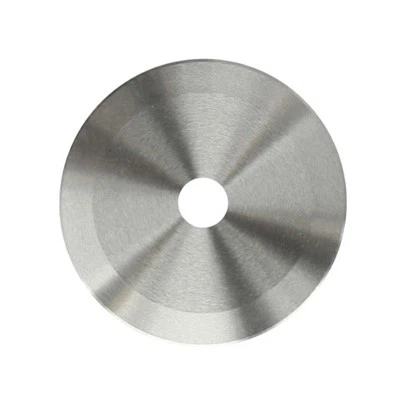
In the industrial landscape, non - standard blades play a crucial role in a wide range of applications. As a non - standard blades supplier, I've witnessed firsthand the challenges that customers face when it comes to the lifespan of these specialized cutting tools. A longer lifespan not only reduces costs but also improves overall productivity. In this blog post, I'll share some practical strategies on how to improve the lifespan of non - standard blades.
1. Material Selection
The first step in enhancing the lifespan of non - standard blades is choosing the right material. Different materials have varying properties such as hardness, toughness, and corrosion resistance, which directly impact the blade's performance and durability.
For applications that require high hardness and wear resistance, carbide is an excellent choice. Carbide blades can withstand high - speed cutting and abrasive materials. For instance, in metalworking industries where cutting through tough alloys is common, carbide non - standard blades can last significantly longer than those made from other materials. However, carbide is relatively brittle, so it may not be suitable for applications with high impact forces.
On the other hand, high - speed steel (HSS) is known for its good combination of hardness and toughness. HSS blades can handle a wide range of cutting tasks, including those that involve interrupted cuts. They are also more cost - effective compared to carbide in some cases. For example, in woodworking or paper cutting applications, HSS non - standard blades can provide a good balance between performance and cost. You can explore different options like the Charter Machine Blade which may be available in various materials to suit your specific needs.
2. Proper Heat Treatment
Heat treatment is a critical process that can significantly improve the mechanical properties of non - standard blades. Through processes such as quenching and tempering, the blade's hardness, toughness, and wear resistance can be optimized.
Quenching involves rapidly cooling the blade after heating it to a specific temperature. This process creates a hard and brittle structure. However, if not followed by tempering, the blade may be too brittle and prone to cracking. Tempering is the subsequent process of reheating the quenched blade to a lower temperature, which relieves internal stresses and improves toughness.
A well - executed heat treatment process can increase the blade's resistance to wear and deformation. For example, in a stamping application, a non - standard blade that has undergone proper heat treatment can withstand repeated impacts without losing its cutting edge, thus extending its lifespan.
3. Precision Manufacturing
Precision manufacturing is essential for the longevity of non - standard blades. The dimensional accuracy and surface finish of the blade directly affect its cutting performance and durability.
During the manufacturing process, tight tolerances must be maintained to ensure that the blade fits perfectly into the cutting equipment. Any deviation in dimensions can lead to uneven wear, reduced cutting efficiency, and premature blade failure. For example, if the blade's thickness is not consistent, it may cause uneven pressure distribution during cutting, resulting in faster wear on one side of the blade.
In addition, a smooth surface finish is crucial. A rough surface can increase friction during cutting, which not only consumes more energy but also accelerates wear. By using advanced manufacturing techniques such as grinding and polishing, we can achieve a high - quality surface finish for our Non - standard Blades, thereby improving their lifespan.
4. Appropriate Cutting Parameters
Selecting the right cutting parameters is vital for maximizing the lifespan of non - standard blades. Cutting speed, feed rate, and depth of cut are the three main parameters that need to be carefully considered.
If the cutting speed is too high, the blade may overheat, leading to rapid wear and reduced hardness. On the other hand, if the cutting speed is too low, the blade may not cut efficiently, and the material may cause more friction, also resulting in increased wear. The optimal cutting speed depends on the material being cut, the blade material, and the cutting conditions.
The feed rate determines how fast the material is fed into the blade. A high feed rate can increase productivity, but if it's too high, it can put excessive stress on the blade, causing chipping or breakage. Similarly, the depth of cut should be chosen based on the blade's strength and the material properties.
For example, when cutting a soft plastic material, a relatively high cutting speed and a moderate feed rate may be appropriate. However, when cutting a hard metal, a lower cutting speed and a smaller depth of cut may be required to protect the blade.
5. Regular Maintenance and Inspection
Regular maintenance and inspection are key to extending the lifespan of non - standard blades. After each use, the blade should be cleaned to remove any debris or chips that may have accumulated on its surface. This helps prevent corrosion and reduces the risk of abrasive particles causing premature wear.
Inspection should be carried out regularly to detect any signs of wear, damage, or dullness. If a blade shows signs of chipping, cracking, or excessive wear, it should be repaired or replaced immediately. Minor damage can sometimes be repaired through processes such as re - sharpening. However, if the damage is severe, replacement is the best option to avoid further problems.
For example, in a paper cutting application, a Dotted Paper Cutting Blade should be inspected regularly for signs of wear on the teeth. If the teeth are worn down, the cutting quality will deteriorate, and the blade may need to be sharpened or replaced.
6. Proper Storage
Proper storage of non - standard blades is often overlooked but is essential for maintaining their quality. Blades should be stored in a dry, clean environment to prevent corrosion. They should be protected from physical damage, such as scratches or impacts.
If possible, blades should be stored in a dedicated blade storage case or rack. This helps keep them organized and reduces the risk of damage. For example, long blades should be stored horizontally to prevent bending, while small blades can be stored in a box with individual compartments.


7. Training and Operator Skill
The skill and knowledge of the operators using non - standard blades can also have a significant impact on their lifespan. Operators should be trained on the proper use, maintenance, and handling of the blades.
They should understand the importance of following the recommended cutting parameters and safety procedures. For example, operators should be trained to start and stop the cutting equipment smoothly to avoid sudden impacts on the blade. They should also know how to identify signs of blade wear and when to perform maintenance or replacement.
By investing in operator training, companies can ensure that their non - standard blades are used in the most efficient and effective way, thereby extending their lifespan.
In conclusion, improving the lifespan of non - standard blades requires a comprehensive approach that includes proper material selection, heat treatment, precision manufacturing, appropriate cutting parameters, regular maintenance and inspection, proper storage, and operator training. As a non - standard blades supplier, we are committed to providing high - quality blades and offering technical support to help our customers get the most out of their cutting tools.
If you are interested in purchasing non - standard blades or have any questions about blade lifespan improvement, please feel free to contact us for further discussion and procurement negotiation. We look forward to serving you and meeting your specific cutting needs.
References
- Kalpakjian, S., & Schmid, S. R. (2013). Manufacturing Engineering and Technology. Pearson.
- Trent, E. M., & Wright, P. K. (2000). Metal Cutting. Butterworth - Heinemann.