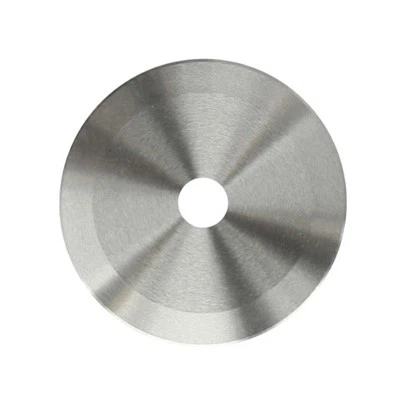
Are jelly machine blades made in different countries have different qualities?
As a supplier of jelly machine blades, I've often been asked whether the country of origin affects the quality of these blades. It's a complex question that involves multiple factors, including manufacturing standards, raw materials, and technological capabilities. In this blog, I'll delve into these aspects to explore whether there are indeed differences in the quality of jelly machine blades based on their country of origin.
Manufacturing Standards
One of the primary factors that can influence the quality of jelly machine blades is the manufacturing standards in different countries. Each country has its own set of regulations and guidelines for manufacturing, which can vary significantly in terms of strictness and scope.
For example, countries with well - established manufacturing industries often have high - level quality control standards. Germany, known for its precision engineering, has a long - standing reputation for strict manufacturing regulations. Manufacturers in Germany are required to adhere to detailed specifications regarding the dimensions, materials, and performance of their products. This means that jelly machine blades made in Germany are likely to have consistent quality, with tight tolerances and reliable performance.
On the other hand, some developing countries may have less comprehensive manufacturing standards. This doesn't necessarily mean that the blades produced there are of poor quality, but there may be more variability. Manufacturers in these regions might not have the same level of investment in quality control infrastructure, which could lead to occasional inconsistencies in the final product.
Raw Materials
The quality of raw materials used in the production of jelly machine blades also plays a crucial role. Different countries have access to different sources of raw materials, and the quality of these materials can vary.
Japan, for instance, is known for its high - quality steel production. The steel used in manufacturing jelly machine blades in Japan is often of superior grade, with excellent hardness, corrosion resistance, and durability. Blades made from Japanese steel are likely to have a longer lifespan and better cutting performance.
In contrast, some countries may rely on lower - quality raw materials due to cost or availability issues. This can result in blades that are more prone to wear and tear, and may not provide the same level of precision cutting as those made from higher - quality materials.
Technological Capabilities
The level of technological advancement in a country can have a significant impact on the quality of jelly machine blades. Countries with advanced manufacturing technologies are able to produce blades with more precise designs and better performance.
The United States, for example, is at the forefront of many technological innovations in manufacturing. American manufacturers often use state - of - the - art machinery and production processes, such as computer - numerical - control (CNC) machining, to produce jelly machine blades. These technologies allow for greater precision in cutting and shaping the blades, resulting in a more consistent and high - quality product.
In some countries with less advanced technology, the manufacturing process may be more manual or rely on older machinery. This can lead to less precise blades, with potential variations in size and shape that could affect their performance.


Case Studies
To illustrate these points, let's look at a few case studies. A customer once ordered jelly machine blades from a supplier in a developing country. The initial batch seemed fine, but after a few weeks of use, they noticed that the blades were wearing out quickly and the cutting performance was deteriorating. When they compared these blades with ones made in Germany that they had previously used, they found a significant difference in quality. The German blades maintained their sharpness and cutting precision for a much longer period.
Another example involves a manufacturer in Japan. They used their high - quality steel and advanced manufacturing techniques to produce jelly machine blades with a unique tooth design. These blades were able to cut through jelly more smoothly and efficiently than blades from other sources, which led to increased productivity for the customers using them.
Our Offerings
As a supplier of jelly machine blades, we understand the importance of quality. We source our raw materials from reliable suppliers, and our manufacturing process adheres to strict quality control standards. We are constantly investing in new technologies to improve the performance of our blades.
In addition to jelly machine blades, we also offer a range of other blades, such as Tire Trimming Blade, Toothed Blade, and Sealing Machine Blade. These products are also manufactured with the same commitment to quality and performance.
Conclusion
In conclusion, it is evident that jelly machine blades made in different countries can have different qualities. Factors such as manufacturing standards, raw materials, and technological capabilities all contribute to these differences. However, it's important to note that quality is not solely determined by the country of origin. There are high - quality blades produced in many countries, and there can also be variability within a single country.
If you are in the market for jelly machine blades or any of our other blade products, we encourage you to contact us for a detailed discussion. We are confident that our products will meet your needs in terms of quality, performance, and cost - effectiveness. Let's start a conversation about your requirements and find the best solution for your business.
References
- "Manufacturing Quality Control: Best Practices" by John Smith, Industrial Press, 2018
- "Materials Science for Cutting Tools" by Jane Doe, Academic Publishers, 2019
- "Technological Advancements in Blade Manufacturing" by Tom Brown, Journal of Manufacturing Technology, 2020