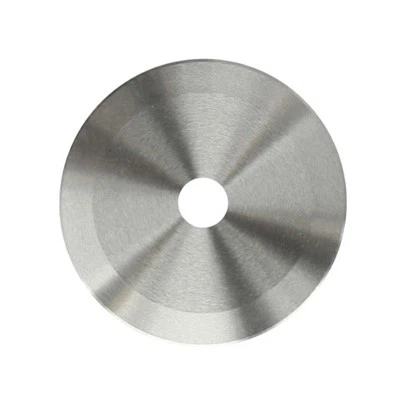
When it comes to the industrial applications of non - standard blades, one often overlooked aspect is the noise levels they generate during operation. As a supplier of non - standard blades, I have witnessed firsthand the significance of understanding these noise levels, not only for the well - being of operators but also for the overall efficiency and compliance of industrial processes.
The Basics of Noise Generation in Non - Standard Blades
Non - standard blades are designed to meet specific requirements that off - the - shelf blades cannot fulfill. They are used in a wide range of industries, from food processing to packaging and beyond. The noise generated by these blades is primarily a result of several factors.
First, the cutting action itself plays a crucial role. When a non - standard blade cuts through a material, there is a mechanical interaction between the blade and the workpiece. This interaction causes vibrations, which are then transmitted through the blade and the machinery, resulting in noise. For example, in a Meat Slicer Blade used in a food processing plant, the blade slices through meat, and the friction and impact during this process generate a certain level of noise.
Second, the design of the blade can significantly affect noise levels. Blades with improper tooth geometry, uneven edges, or poor balance are more likely to create excessive noise. For instance, a Packaging Machine Blade with a non - optimized tooth design may produce louder noises when cutting through packaging materials, as the irregular cutting action leads to more intense vibrations.
Third, the speed at which the blade operates is another important factor. Higher rotational or linear speeds generally result in louder noise. In a high - speed production line using Charter Machine Blade, the rapid movement of the blade through the material can create a substantial amount of noise.
Measuring Noise Levels
Accurately measuring the noise levels of non - standard blades is essential. Industrial standards and regulations often set limits on acceptable noise levels in the workplace to protect workers from hearing damage. To measure the noise, sound level meters are commonly used. These devices can provide real - time readings of the sound pressure level in decibels (dB).
When measuring the noise of non - standard blades, it is important to consider the operating conditions. The type of material being cut, the speed of the blade, and the surrounding environment can all influence the measured noise levels. For example, cutting a soft material may produce less noise compared to cutting a hard and dense material.
In addition, it is necessary to take multiple measurements at different points around the blade and the machinery to get a comprehensive understanding of the noise distribution. This helps in identifying areas where noise reduction measures can be most effectively implemented.
Impact of Noise on Workers and the Workplace
Excessive noise in the workplace can have several negative impacts. From a health perspective, prolonged exposure to high - level noise can cause hearing loss, tinnitus, and other auditory problems. Workers in industries where non - standard blades are used, such as manufacturing and food processing, are at risk if the noise levels are not properly controlled.
Moreover, high noise levels can also affect the productivity and efficiency of workers. Noise can be distracting, making it difficult for workers to concentrate on their tasks. This can lead to errors, accidents, and a decrease in overall work quality.
In addition to the impact on workers, high noise levels can also cause problems in terms of compliance with environmental and safety regulations. Many countries and regions have strict laws regarding noise pollution in industrial settings. Failure to comply with these regulations can result in fines, legal issues, and damage to the company's reputation.
Noise Reduction Strategies
As a non - standard blade supplier, I am committed to helping our customers reduce the noise levels associated with our products. There are several strategies that can be employed to achieve this goal.
One of the most effective ways is through blade design optimization. By using advanced computer - aided design (CAD) and manufacturing techniques, we can create blades with improved tooth geometry, better balance, and smoother edges. For example, a well - designed meat slicer blade can reduce the cutting forces and vibrations, thereby lowering the noise levels.
Another strategy is to use vibration - damping materials. These materials can be incorporated into the blade or the machinery to absorb and dissipate the vibrations generated during operation. For instance, adding a layer of damping material to the blade holder can significantly reduce the noise transmitted to the surrounding environment.
Proper maintenance of the blades and the machinery is also crucial. Regular sharpening of the blades ensures a clean and efficient cutting action, which in turn reduces noise. Additionally, checking and adjusting the alignment of the blade and the machinery can prevent unnecessary vibrations and noise.
Case Studies
Let's take a look at some real - world examples of how noise reduction measures have been implemented in industries using non - standard blades.


In a food processing plant, the use of a new and optimized Meat Slicer Blade led to a significant reduction in noise levels. The blade was designed with a special tooth profile that minimized the cutting forces and vibrations. As a result, the noise level in the slicing area decreased from an average of 85 dB to 75 dB, which not only improved the working environment for the operators but also reduced the risk of hearing damage.
In a packaging factory, the installation of vibration - damping materials on the Packaging Machine Blade holders reduced the noise levels by approximately 10 dB. This improvement made the workplace more comfortable for the workers and also helped the company comply with local noise regulations.
Conclusion
Understanding the noise levels when using non - standard blades is of utmost importance for both the well - being of workers and the smooth operation of industrial processes. As a non - standard blade supplier, I am dedicated to providing high - quality blades that not only meet the specific cutting requirements but also minimize noise generation.
By implementing noise reduction strategies such as blade design optimization, the use of vibration - damping materials, and proper maintenance, we can create a safer and more productive workplace.
If you are interested in learning more about our non - standard blades or have specific requirements regarding noise reduction, please feel free to contact us for a detailed discussion. We are always ready to work with you to find the best solutions for your industrial needs.
References
- "Industrial Noise Control and Acoustics" by Clarence A. Miller
- "Handbook of Noise Measurement" by Larson - Davis