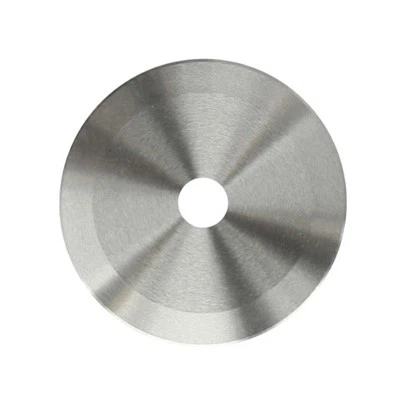
As a supplier of food slicer blades, I understand the importance of choosing the right blade for slicing cheese. Different types of cheese require different blade characteristics to achieve the best slicing results. In this blog post, I will explore the various types of food slicer blades available and discuss which ones are better for slicing different kinds of cheese.
Types of Food Slicer Blades
Straight Edge Blades
Straight edge blades are the most common type of food slicer blades. They have a simple, straight cutting edge that is ideal for slicing hard and semi - hard cheeses. These blades are typically made from high - carbon steel or stainless steel, which provides sharpness and durability.
High - carbon steel blades are very sharp and can easily cut through hard cheeses like Parmesan or cheddar. However, they are more prone to rusting and require regular maintenance. Stainless steel blades, on the other hand, are resistant to corrosion and are easier to clean, making them a popular choice for commercial kitchens.
When slicing hard cheeses with a straight edge blade, the key is to have a sharp blade. A dull blade can crush the cheese instead of slicing it cleanly, resulting in uneven slices and a loss of flavor. It is recommended to sharpen the blade regularly or replace it when it becomes dull.
Serrated Blades
Serrated blades are another option for slicing cheese, especially softer cheeses. The saw - toothed edge of serrated blades allows them to grip the cheese better and cut through it without squishing. This is particularly useful for soft, creamy cheeses like Brie or Camembert.
Serrated blades are also great for slicing cheeses with a rind. The serrations can cut through the tough rind while leaving the soft interior intact. Similar to straight edge blades, serrated blades can be made from high - carbon steel or stainless steel.
One advantage of serrated blades is that they stay sharp for longer periods compared to straight edge blades when slicing soft materials. However, they can be more difficult to sharpen due to their serrated edge. Some serrated blades are designed to be disposable, which can be a convenient option for those who do not want to deal with sharpening.
Wavy Edge Blades
Wavy edge blades are a less common but effective option for slicing cheese. They have a wavy cutting edge that provides a combination of the benefits of straight and serrated blades. The waves in the edge can help to grip the cheese and prevent it from sliding during slicing, while still providing a relatively clean cut.
Wavy edge blades are suitable for a wide range of cheeses, from soft to hard. They can be particularly good for slicing semi - soft cheeses like Gouda or Monterey Jack. The wavy edge can create a unique, decorative slice that is visually appealing.
Considerations for Different Types of Cheese
Hard Cheeses
Hard cheeses, such as Parmesan, Romano, and aged cheddar, require a blade that can cut through their dense texture without crumbling. A straight edge blade made from high - quality steel is the best choice. These blades should be extremely sharp to ensure a clean slice. The thickness of the slices can be adjusted on the food slicer according to personal preference. For grating hard cheeses, a very thin slice is often desired, while for serving as a snack or in sandwiches, a slightly thicker slice may be better.
Soft Cheeses
Soft cheeses, like Mozzarella, Brie, and Cream Cheese, need a blade that can cut through their delicate texture without smearing. Serrated blades are ideal for this purpose. The serrations grip the soft cheese and cut through it smoothly. When slicing soft cheeses, it is important to use a gentle touch to avoid crushing the cheese. Soft cheeses can also be chilled slightly before slicing to make the process easier.
Semi - Soft Cheeses
Semi - soft cheeses, such as Havarti, Munster, and Gouda, can be sliced with either straight edge, serrated, or wavy edge blades. The choice depends on personal preference and the desired texture of the slices. A straight edge blade will give a clean and precise cut, while a serrated or wavy edge blade can add a bit of visual interest to the slices.
Our Range of Food Slicer Blades
We are a leading supplier of food slicer blades, offering a wide variety of blades to meet the needs of different cheese slicing applications. Our blades are made from high - quality materials and are precision - engineered to ensure the best performance.
In addition to cheese slicing blades, we also supply other types of blades, such as Laminating Machine Blade, Semiconductor Punching Blade, and Woodworking Steel Planer Blade. Our team of experts can provide advice on the right blade for your specific needs.
Conclusion
In conclusion, the choice of food slicer blade for slicing cheese depends on the type of cheese you are slicing. Straight edge blades are best for hard cheeses, serrated blades are ideal for soft cheeses, and wavy edge blades can be used for a variety of cheeses. By choosing the right blade, you can ensure clean, even slices and a better overall cheese - slicing experience.


If you are in the market for high - quality food slicer blades or have any questions about our products, we encourage you to contact us for a detailed discussion. Our team is ready to assist you in finding the perfect blade for your cheese - slicing requirements.
References
- "The Cheese Science Toolkit" by Mary Karlin
- "Cheese: A Global History" by Andrew Dalby